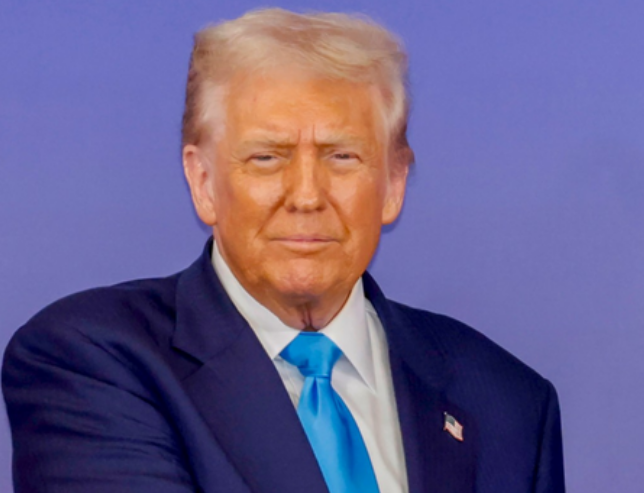

WASHINGTON– President Donald Trump said Monday that the United States has taken in and is set to receive more than $600 billion through tariffs, arguing that the policy has strengthened the country’s finances and enhanced national security.
The President also accused the media of minimizing the issue ahead of a major Supreme Court ruling related to tariffs.
In a post on his Truth Social platform, Trump said the revenue generated from tariffs has been substantial but has not received adequate coverage. He claimed the media was deliberately ignoring the issue in an effort to influence the court’s upcoming decision.
“We have taken in, and will soon be receiving, more than 600 Billion Dollars in Tariffs,” Trump wrote, adding that tariffs have made the country “financially, and from a national security standpoint, far stronger and more respected than ever before.”
Since returning to office in January 2025, Trump and his administration have relied heavily on tariffs as a tool of national security and foreign policy, imposing steep duties on imports from multiple countries. Among the most significant measures was a 50 percent tariff placed on goods imported from India.
Meanwhile, India is moving to reduce its reliance on the U.S. market as trade tensions persist, according to a report cited by the South China Morning Post. The report said New Delhi plans to diversify its export destinations, a strategy expected to accelerate in the coming period.
India has maintained a firm stance since the United States imposed the 50 percent import tariff last year, while continuing to signal openness to negotiations. The United States remains India’s largest export market, accounting for roughly 18 percent of its total goods exports, including garments and leather products.
However, prospects for a bilateral trade agreement remain uncertain. Analysts cited in the report said India has shown little willingness to open sensitive sectors such as agriculture and dairy to U.S. products, and expressed skepticism that Washington will significantly ease its tariff measures. (Source: IANS)