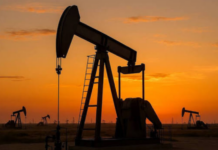

WASHINGTON — Oil prices dropped sharply and global markets rallied after President Donald Trump said the United States would delay planned strikes on Iran, signaling a possible diplomatic opening in the escalating conflict.
In a post on Truth Social, Trump said Washington would hold off on attacking Iranian energy infrastructure for five days following what he described as “very good and productive conversations” with Tehran aimed at ending the conflict.
He added that the pause would remain “SUBJECT TO THE SUCCESS OF THE ONGOING MEETINGS AND DISCUSSIONS,” suggesting negotiations are underway in the three-week-old war.
The announcement marked the first public acknowledgment of high-level discussions since the United States and Israel began striking Iranian military and leadership targets in late February, according to multiple media reports.
Financial markets reacted quickly. U.S. stock futures rose nearly 2 percent, reversing earlier losses, while Brent crude, the global oil benchmark, fell below $100 a barrel after previously climbing above $114 during the conflict.
European markets also rebounded after early declines, and cryptocurrencies moved higher as investor sentiment improved.
Analysts said easing tensions could help stabilize energy flows through the Strait of Hormuz, a critical chokepoint for global oil shipments.
“If talks have been so positive, then you would hope that a path to an opening of the Strait has become clearer,” said Hamad Hussain of Capital Economics.
Despite the market rally, uncertainty remains high. Iranian state-linked media described Trump’s move as a retreat, while other reports suggested there had been no direct or mediated talks prior to the announcement.
The conflict has already disrupted global energy infrastructure. Iranian missile strikes have damaged key facilities, including a gas-to-liquids plant in Qatar, forcing part of the operation offline for at least a year.
Rising fuel costs are also beginning to ripple through economies. Diesel prices in the United States have jumped more than 40 percent over the past month, raising concerns about supply chains and consumer inflation.
Investors remain cautious, with volatility persisting in bond markets and expectations growing that central banks may keep interest rates higher for longer amid inflation risks.
For India, the decline in oil prices provides near-term relief. As one of the world’s largest crude importers, the country is highly sensitive to price swings, and lower costs can help ease inflation and reduce fiscal pressure.
However, risks remain in the Gulf region, where millions of Indian nationals live and work. Any further escalation could disrupt employment and remittance flows that are critical to India’s economy. (Source: IANS)