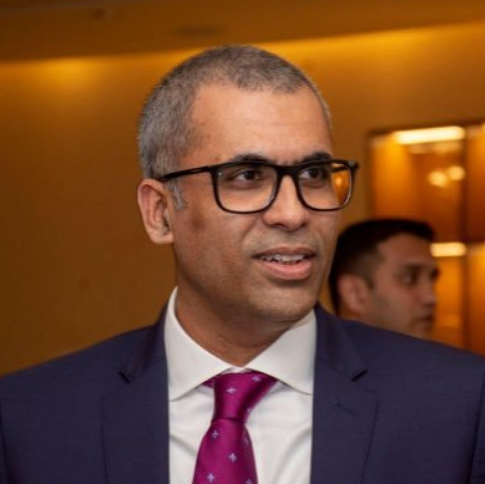

MUMBAI, India — NSE Indices Limited is sharpening its focus on derivatives-linked stocks and rolling out new index methodologies as part of an evolving strategy to meet changing investor demands, CEO Aniruddha Chatterjee said Thursday.
Speaking on the sidelines of an event, Chatterjee said the exchange’s use of derivatives in index construction is not new, but is now being expanded and refined through updated frameworks and new product launches, including the recently introduced Nifty India FPI 150 index.
“Using derivatives to create an index, something that we have done long back. It’s not going to be a new thing for us. So, if you look at our sectoral index, I mean almost 4-5 years back we have taken the call that we will have a preference towards stocks which are in F&O segment,” he said.
The strategy shift toward prioritizing stocks in the futures and options segment began about four to five years ago, particularly in the design of sectoral indices, he added.
Chatterjee noted that a broader overhaul of the exchange’s index strategy was announced in November and began implementation in December, following consultations with industry participants and coordination with the Securities and Exchange Board of India.
One of the major indices affected by the changes is the Nifty Bank index, commonly known as Bank Nifty.
The NSE is also expanding its product suite with new indices tailored to specific investor segments. The Nifty India FPI 150 index, for instance, incorporates a foreign investment factor to determine stock weightings, making it easier for foreign portfolio investors to align with benchmark strategies.
“The index introduces a unique foreign investment factor to determine the weight of individual stocks, making it easier for foreign portfolio investors to replicate investment strategies,” Chatterjee said.
He added that the launch is part of a broader effort to build a new family of indices aligned with evolving market dynamics.
“The exchange intends to introduce more such products in the future, building on insights from its internal analysis and three decades of experience in index creation,” he said. (Source: IANS)