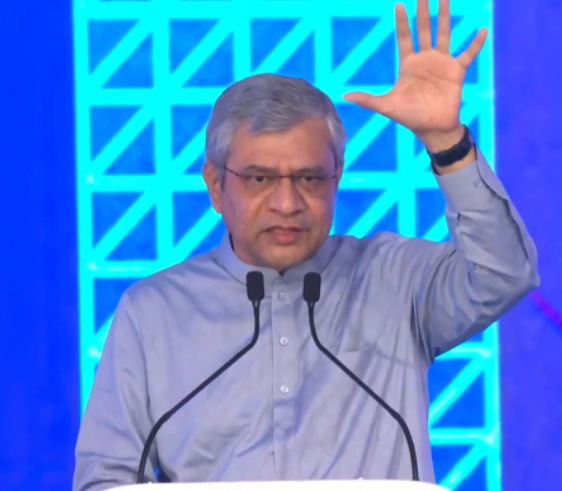
NEW DELHI — India’s first indigenously developed bullet train is expected to begin trial runs by May or June 2027, with commercial inauguration likely within two to four months after testing, Railway Minister Ashwini Vaishnaw said Tuesday.
Speaking at the “NaMo for Viksit Bharat” event in Vadodara, Vaishnaw said the first body frame of the high-speed train had recently been completed and sent for squeeze testing.
“By May or June of next year, India’s own bullet train will be on the tracks for testing. After a testing period of 2-4 months, the bullet train will be inaugurated by Prime Minister Narendra Modi,” Vaishnaw said.
He said the project is being developed as part of India’s push for greater self-reliance and is expected to significantly reduce travel time between Vadodara and Mumbai.
“When you ride the bullet train from Vadodara, you will reach Mumbai in just an hour and a half,” he said.
Vaishnaw said construction on the Mumbai-Ahmedabad bullet train corridor is progressing rapidly, with the Surat-Vapi section expected to be completed by December.
Highlighting broader railway reforms, he said the government is modernizing operating systems, reservation platforms and construction protocols.
“We are reforming and modernising everything, from operating systems and reservation systems to old construction protocols,” Vaishnaw said.
He also pointed to several major railway projects completed in recent years, including the Chenab Bridge and the rail connectivity project linking Mizoram to the national railway network.
According to Vaishnaw, 280 railway stations have been redeveloped and 36,000 kilometers of new railway tracks have been laid. He added that cargo trains incorporating Vande Bharat technology are also under development.
Vaishnaw said the pace of railway infrastructure development has accelerated despite disruptions caused by the COVID-19 pandemic.
“The modern face of Indian Railways that is emerging will benefit many future generations,” he said. (Source: IANS)