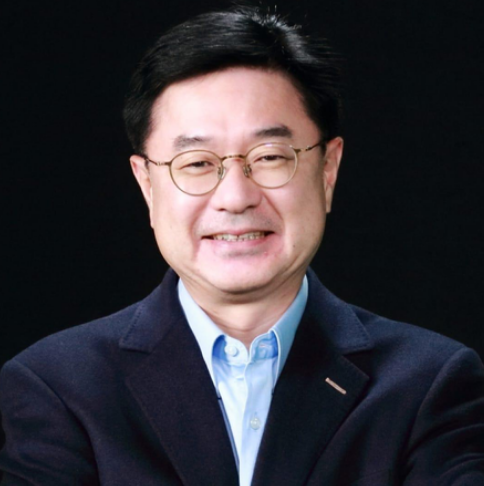

NEW DELHI — Samsung wants to help India lead the next wave of technological innovation as the company marks 30 years in the country, Samsung South West Asia President and CEO JB Park said.
Park said India has evolved from being a market where global technologies were introduced to a country that increasingly helps imagine, engineer and develop technology for the rest of the world.
“What inspires me most about India is that it constantly exceeds expectations,” Park said. “Today, we don’t look at India just as a market of 1.4 billion people. We see India as a place where the future of technology is being imagined, developed and led,” he added.
As artificial intelligence reshapes consumer technology, Samsung engineers in India are working with global teams to develop next-generation AI experiences.
“AI will only be meaningful if it solves real problems for real people. And, there are few places that challenge us to do that better than India,” Park said.
Samsung’s research and development engineers in Bengaluru and Noida work with colleagues across the company’s global R&D network, contributing to technologies and consumer experiences designed for India and international markets.
“India challenges us to innovate differently,” Park said. “Building products for a country of this scale and diversity means designing solutions that are intuitive, inclusive and relevant to millions of people with very different needs. Those innovations often go on to benefit consumers around the world,” he added.
Samsung’s investments in India have also expanded beyond manufacturing and R&D to include education, skills development and support for innovation.
“Technology does not create progress on its own. People do,” Park said. “We believe human potential is the most important technology platform of all,” he added.
“Young people are using technology to solve some of the most pressing problems faced by society. That is exactly the kind of innovation India needs now and in future,” he noted.
As Samsung completes three decades in India, Park said the company’s legacy should ultimately be measured not only by the products, manufacturing ecosystem and research capabilities it has helped build, but also by the people and ideas it has helped nurture. (Source: IANS)