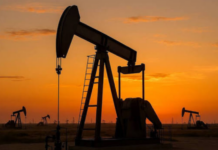
NEW DELHI— Former U.S. President Donald Trump’s recent social media claim about a new deal to explore “massive oil reserves” in Pakistan has raised eyebrows, as energy data reveals the country possesses only modest oil resources and remains heavily dependent on imports.
According to Worldometer figures, Pakistan had just 353.5 million barrels of proven oil reserves as of 2016, ranking 52nd globally and accounting for a mere 0.021 percent of the world’s total reserves.
With current daily consumption estimated at around 556,000 barrels, Pakistan’s reserves would last less than two years without imports. The country’s daily production stands at just 70,000 to 80,000 barrels—barely 15 to 20 percent of its domestic requirement.
An Indian Oil Corporation (IOC) official noted that Pakistan’s reliance on imports is reflected in its fuel prices, which are among the highest globally. Petrol currently costs Rs 272.15 per liter and high-speed diesel Rs 284.35 per liter—more than twice the rates in India, where petrol in Delhi is priced at Rs 94.77 and diesel at Rs 87.67 per liter.
Pakistan also faces a low exploration success rate and limited refining capacity, compounded by political instability, financial constraints, and security risks—all of which deter serious foreign investment in the sector. While there is some potential for offshore and shale exploration in regions like Balochistan and near Karachi, results have so far been inconclusive or commercially unviable.
Despite these realities, Trump took to his social media platform, Truth Social, to announce a partnership: “We have just concluded a Deal with the Country of Pakistan, whereby Pakistan and the United States will work together on developing their massive Oil Reserves… We are in the process of choosing the Oil Company that will lead this Partnership. Who knows, maybe they’ll be selling Oil to India some day!”
Energy experts say such optimism is premature given Pakistan’s limited proven reserves and infrastructure challenges. (Source: IANS)