
NEW DELHI– In a major advance for computational astrophysics, researchers from India and France have developed a new method to simulate the chaotic environments of stellar atmospheres with far greater accuracy than ever before.
The study, published in Astronomy & Astrophysics, marks a significant leap in modeling stellar spectra — the key tool astronomers use to understand the physical conditions inside stars, circumstellar disks, and interstellar clouds.
For decades, most models assumed that while atoms could stray from equilibrium in their energy states, their velocities still followed a predictable distribution known as the Maxwellian curve. That simplification made calculations feasible but ignored the true complexity of stellar atmospheres, where photon scattering, fluctuating energy levels, and non-equilibrium motion dominate.
Addressing this challenge requires solving what astrophysicists call the full non-local thermodynamic equilibrium (FNLTE) radiative transfer problem, first outlined in the 1980s but long considered computationally intractable.
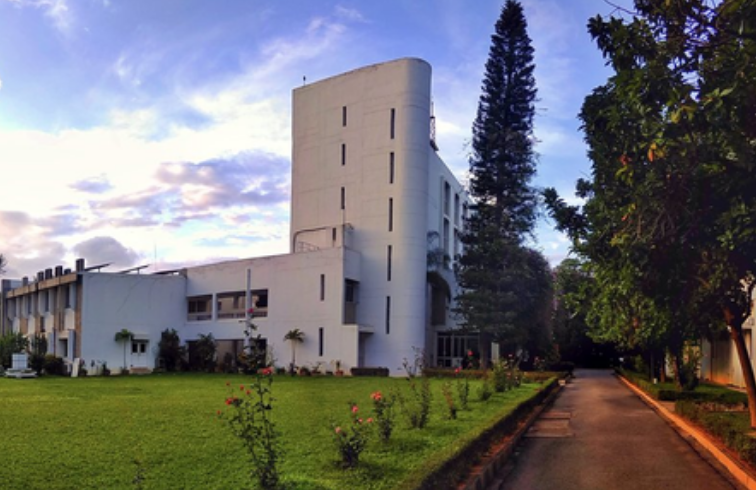
A breakthrough came from a collaboration between the Indian Institute of Astrophysics (IIA) in Bengaluru and the Institut de Recherche en Astrophysique et Planétologie (IRAP) in Toulouse, France. The team, led by M. Sampoorna of IIA along with T. Lagache and F. Paletou of IRAP, first tackled the simpler case of a two-level atom. Now, they have successfully extended the solution to a three-level atom system — a milestone that introduces new scattering processes such as Raman scattering, where atoms absorb light and re-emit it at a different frequency.
When the scientists compared their new FNLTE simulations with standard models, the results revealed major differences. Excited hydrogen atoms near the stellar surface no longer followed the neat Maxwellian velocity distribution but instead showed significant deviations — exactly where astronomers collect crucial spectral data.
“This is a major conceptual jump. Moving from two to three or more atomic levels brings us much closer to capturing the true behavior of stellar matter,” Sampoorna said.
The researchers are now working to generalize the method to even more complex atomic systems and to develop faster numerical techniques capable of handling the massive computations required.
The breakthrough opens the door to unprecedentedly realistic simulations of stellar spectra, offering astronomers deeper insights into the physics of stars and the environments that surround them. (Source: IANS)