
NEW DELHI, India — The Indian rupee is likely to stage a strong recovery in the second half of the next financial year, with geopolitical uncertainty linked to delays in an India–U.S. trade deal emerging as the primary factor behind the currency’s recent weakness, according to an SBI Research report released on Wednesday.
The report said prolonged uncertainty around the trade agreement has been the single most important reason for the rupee’s slide against the U.S. dollar, even as India’s trade data reflects resilience amid protectionism, global labor supply disruptions, and broader economic headwinds.
State Bank of India Group Chief Economic Advisor Soumya Kanti Ghosh said that while the geopolitical risk index has moderated since April 2025, its average level between April and October 2025 remains well above the decadal average, highlighting the sustained pressure global uncertainties have placed on the rupee.
Ghosh said SBI’s empirical analysis indicates that the rupee is currently in a depreciating phase but is likely to exit this regime in the coming months.
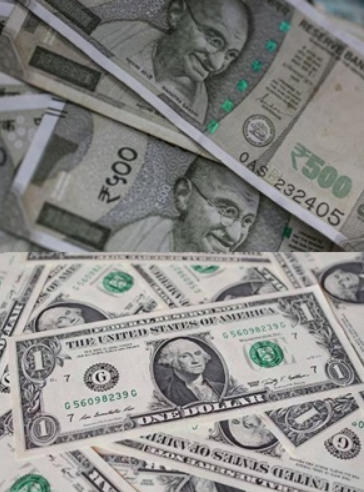
After breaching the psychologically important level of 90 per dollar, the rupee crossed 91 on Tuesday. However, it recovered sharply on Wednesday, strengthening to as much as 90.25 during the session, supported in part by cooling crude oil prices that improved overall market sentiment.
According to the report, the current decline represents the fastest depreciation of the rupee when measured as a five-rupee move against the dollar. In less than a year, the currency has weakened from around 85 to 90 per dollar.
SBI said the slide has been driven largely by foreign portfolio investor outflows, particularly from equities after two years of strong inflows, combined with uncertainty surrounding the India–U.S. trade negotiations.
Since April 2, 2025, when the United States announced sweeping tariff hikes across multiple economies, the rupee has depreciated 5.7% against the dollar — the steepest decline among major global currencies — despite intermittent periods of appreciation fueled by optimism over a potential trade deal.
The report noted that while the rupee has been the most depreciated major currency during this period, it has not been the most volatile. This, it said, underscores the significant impact of the 50% tariff imposed on India, which SBI identified as a key factor behind the current phase of rupee depreciation. (Source: IANS)