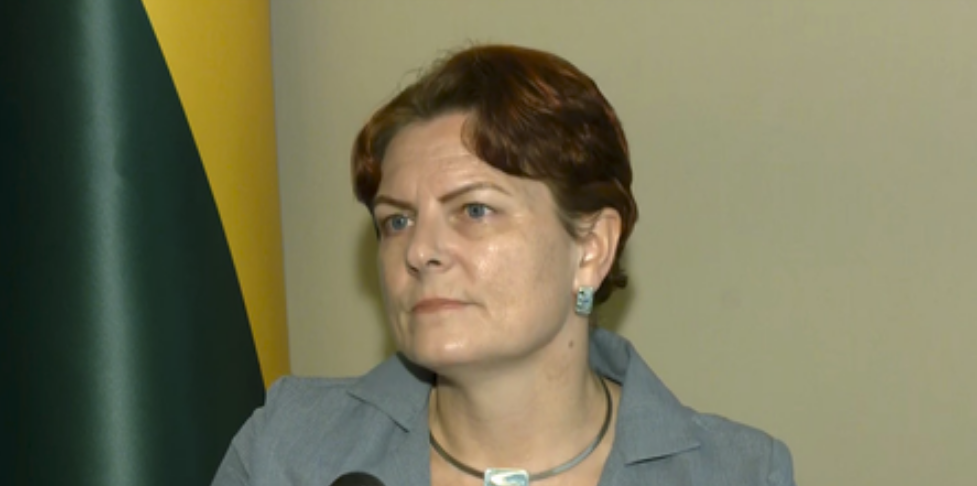
NEW DELHI, Delhi — Lithuania’s Ambassador to India, Diana Mickeviciene, has described the proposed European Union–India Free Trade Agreement as a historic and transformative pact, calling it the “mother of all deals” because of its scale, scope, and geopolitical importance.
In an exclusive interview, Mickeviciene said the agreement goes far beyond a conventional trade pact, framing it as a landmark partnership between two major democratic blocs.
“This is an agreement between the two largest trading blocs in the world and between two democracies,” she said, adding that it offers a blueprint for how democratic nations can shape trade relations amid growing global uncertainty.
Mickeviciene said much of the excitement surrounding the EU–India FTA stems from the breadth of opportunities it could unlock for businesses on both sides. She noted that India already plays an important role in global supply chain diversification, a role that could expand significantly once the agreement is finalized.
With the European Union serving as a major pillar of global supply chains, she said deeper economic integration with India is strategically important, particularly as India continues to expand its network of free trade agreements.
Describing the proposed deal as unprecedented in both size and openness, Mickeviciene said India has “come a long way” in its trade engagement, adding that the outlook for EU–India economic ties is highly promising.
Turning to Lithuania, she said the country has experienced strong growth over the past two decades as part of the EU’s common economic area and free trade framework. Partnering more closely with a large and fast-growing economy like India would further strengthen those gains, she said.
Bilateral trade between Lithuania and India currently stands at about €400 million annually when goods and services are combined, a figure she said is far below its true potential. Many of the goods and services exchanged fall squarely within the scope of the proposed FTA. Lithuanian authorities, she said, plan to actively inform businesses about reduced tariffs, simplified procedures, and improved market access once the agreement comes into force.
Mickeviciene also highlighted Lithuania’s strong purchasing power, with per capita income ranging between €29,000 and €30,000, and said Lithuanian consumers are eager for greater access to high-quality Indian products.
She emphasized that one of the most historic elements of the agreement is the level of mutual market access it would provide. “This degree of openness is unique for both the EU and India,” she said.
Against the backdrop of rising global trade tensions and new tariff measures by the United States, the ambassador described the EU–India FTA as a credible alternative for global commerce. Although the EU and India together account for nearly one-third of global trade, current trade volumes between them remain underdeveloped, she said.
The agreement has the potential to significantly change that dynamic. EU projections suggest that trade in goods and services could double within six years, with similar expectations on the Indian side, a development she described as an extremely positive signal for global trade.
On implementation, Mickeviciene said she does not anticipate major obstacles, citing strong political will on both sides. While procedural steps remain, she characterized them as a normal part of the process. She also pointed to extensive technical cooperation, including customs coordination and institutional collaboration, as an opportunity to strengthen interoperability between EU and Indian institutions.
Reiterating the growth potential of Lithuania–India trade, she said both countries already exchange goods and services covered under the proposed FTA framework. Improved market access is expected to boost Lithuanian exports, while Indian goods and services, particularly those in high demand in Lithuania, are likely to find new opportunities as long as they meet quality and competitiveness standards. (Source: IANS)