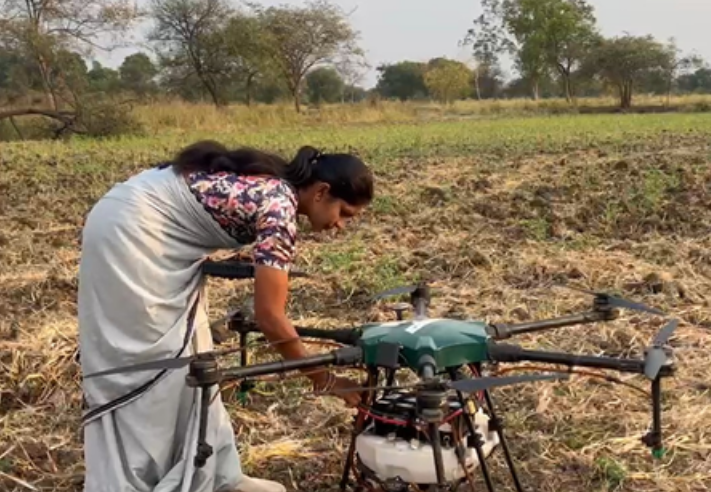
NEW DELHI — Digitalization and the adoption of agricultural technology could generate more than $90 billion in annual GDP gains across Southeast Asia by 2033, with India positioned to play a leading role, according to a new report released Thursday.
The joint report by Omnivore, Beanstalk AgTech, and Briter said India’s experience in venture development and policy frameworks offers a model for unlocking agricultural innovation across the region.
The study identified four key areas driving momentum: digital value chains, inclusive AgriFinTech, agrifood life sciences, and sustainable consumer brands.
Despite the sector’s potential, investment trends have been volatile. AgriTech funding in Southeast Asia peaked at more than $750 million in 2022 but declined by nearly 70 percent by 2025, as investors reassessed fragmented value chains and the challenges of scaling ventures across diverse markets.
Agriculture remains a critical pillar of the regional economy, contributing about 15 percent of GDP and employing up to 40 percent of the workforce.
Development finance institutions and impact investors have committed around $650 million to agrifood funds in the region, the report said, noting that future growth will depend on a mix of equity, credit, and concessional capital.
The report also emphasized that the most viable opportunities lie in focused, single-market strategies built around strong local execution, rather than cross-border expansion. It noted that roughly two-thirds of documented cross-border efforts have failed, highlighting the complexity of operating across multiple Southeast Asian markets.
“The fragmentation is real, but so is the opportunity to uplift agricultural production and farmer communities across the region. Patient, disciplined capital that understands local market dynamics is what moves these ecosystems forward,” said Mark Kahn, managing partner at Omnivore.
On exits, the report found that corporate acquisitions account for about 75 percent of liquidity events in the sector since 2020, while only a handful of companies—eight in total—have gone public during the same period.
The findings underscore both the challenges and the significant untapped potential of AgriTech in Southeast Asia, with India’s model seen as a key reference point for future growth. (Source: IANS)