
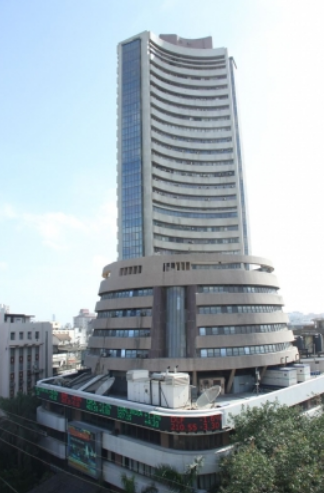

Mumbai— After climbing for four consecutive sessions, Indian equity markets paused on Monday as investors opted to book profits in the absence of strong domestic triggers.
The benchmark BSE Sensex declined by 452 points, or 0.54 percent, to close at 83,606.46. During the session, it fluctuated between a high of 84,099.53 and a low of 83,482.13.
The NSE Nifty 50 mirrored the trend, ending 120.75 points lower at 25,517.05, down 0.47 percent. The index opened at 25,661.65 and touched an intraday high of 25,669.35 before slipping into the red.
Despite the dip in frontline indices, broader markets remained resilient. The Nifty Midcap 100 rose 0.6 percent, while the Nifty Smallcap 100 gained 0.52 percent, signaling sustained investor interest in mid- and small-cap stocks.
Among Sensex constituents, major laggards included Axis Bank, Kotak Mahindra Bank, Maruti, Bajaj Finance, Reliance Industries, Tata Steel, and Bharti Airtel. On the flip side, Trent, State Bank of India, Bharat Electronics, Titan, Bajaj Finserv, and Eicher Motors registered gains.
Sectoral performance was mixed. Public sector banks outperformed, with the Nifty PSU Bank index surging 2.66 percent. Notable gainers included Maharashtra Bank, Punjab National Bank, Bank of Baroda, Union Bank of India, Canara Bank, UCO Bank, Indian Bank, and Punjab & Sind Bank.
Other sectors such as IT, consumer durables, pharma, healthcare, media, and energy also ended higher. However, key indices including Nifty Auto, Bank, Financial Services, FMCG, Metal, Realty, Private Bank, and Oil & Gas closed in negative territory.
Vinod Nair, Head of Research at Geojit Financial Services, said markets took a breather following a strong rally, even as global sentiment improved due to easing tensions in the Middle East and optimism surrounding a potential U.S. trade deal. “Investors are now shifting focus to upcoming corporate earnings, with mid- and small-cap stocks showing resilience amid expectations of improved margins and consumer-driven growth,” he noted.
The India VIX, a gauge of market volatility, rose 3.2 percent to 12.78, indicating increased caution among investors.
Meanwhile, the Indian rupee weakened by 0.21 percent, trading near 85.70 against the U.S. dollar. The dip was attributed to profit booking and long unwinding after recent gains in the currency.
Jateen Trivedi of LKP Securities cautioned that the rupee could remain volatile in the near term due to upcoming U.S. economic data and the looming end of a 90-day extended tariff deadline. He projected a trading range of 85.35 to 86.00 for the rupee in the days ahead. (Source: IANS)