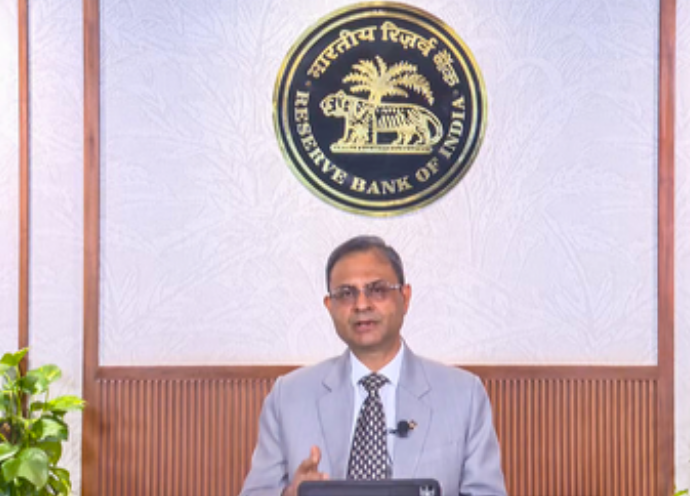
MUMBAI— The recently signed Free Trade Agreement (FTA) between India and the United Kingdom is poised to benefit several key sectors of the Indian economy, including manufacturing, services, and agriculture, Reserve Bank of India (RBI) Governor Sanjay Malhotra said on Friday.
Speaking at an event in Mumbai, Malhotra emphasized that with multilateral trade frameworks currently taking a back seat, India must focus on forging more bilateral trade agreements. “The UK FTA is the way forward, because unfortunately, multilateralism appears to have taken a back seat,” he said, adding that negotiations with the United States are also in advanced stages.
The RBI chief acknowledged that India is currently engaged in multiple trade negotiations across different stages, aiming to expand global trade partnerships.
In a separate interaction with IANS in London, Union Commerce and Trade Minister Piyush Goyal confirmed that India is actively working to improve trade relations with several countries following the historic signing of the UK deal. “Very good talks are going on with New Zealand, Oman, Chile, Peru, and the European Union. And on the bilateral trade agreement (BTA), good discussions are also underway with the United States,” Goyal said. “I firmly believe that all these negotiations will lead to positive outcomes.”
India and the U.S. recently concluded the fifth round of discussions for a proposed BTA in Washington, D.C.
Meanwhile, the Trade and Economic Partnership Agreement (TEPA) between India and the European Free Trade Association (EFTA) is set to take effect on October 1. The agreement is expected to create up to one million direct jobs in India.
The India-UK Comprehensive Economic and Trade Agreement (CETA) has been described as a “historic leap” by the government, aimed at empowering workers, farmers, MSMEs, and startups.
Governor Malhotra highlighted agriculture as a major beneficiary of the UK FTA, noting that nearly 95% of Indian agricultural products will gain duty-free access to the UK market—opening up substantial new export opportunities. (Source: IANS)