NEW DELHI, India — India has emerged as the world’s sixth-largest patent filer, recording more than 64,000 patent applications this year, with resident innovators contributing over 55 percent of the total. Union Minister Jitendra Singh highlighted the milestone on Friday, calling it a major shift from earlier decades when Indian researchers relied heavily on foreign institutions for mentorship and research infrastructure.
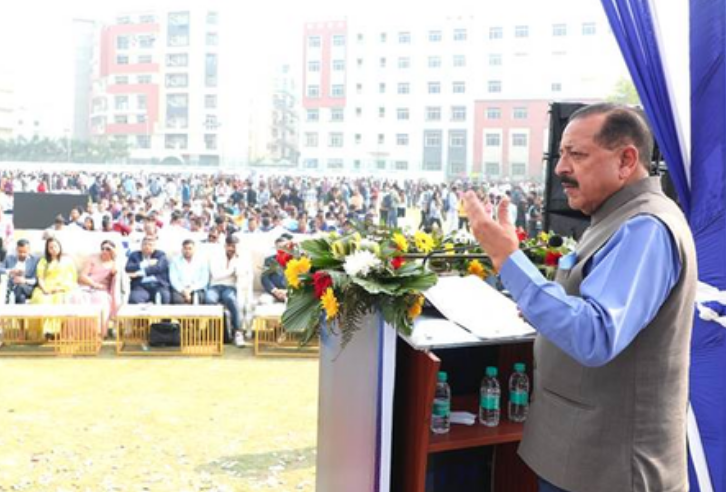
Speaking at the Annual Tech Fest INNOTECH’25 at KIET Deemed University, the Minister of State for Science and Technology said the sharp increase in domestic patent filings reflects a rapidly strengthening innovation landscape and growing global competitiveness. He credited sustained policy reforms, new research incentives, and an enabling environment fostered under Prime Minister Narendra Modi’s leadership.
Singh noted that India has addressed long-standing gaps in policy support and institutional backing, allowing young innovators to pursue advanced research at home and file high-value patents domestically. The shift, he said, underscores India’s rise as a “frontline scientific nation.”
India has climbed from Rank 81 to Rank 38 in the Global Innovation Index in the span of a decade — a leap Singh described as “extraordinary,” driven by consistency, landmark scientific breakthroughs, and an increasing national emphasis on science and technology.
He pointed to achievements such as Chandrayaan-3, the world’s first DNA vaccine developed in India, indigenous antibiotics, and successful gene therapy trials as examples of the country’s expanding scientific capability and growing international influence.
Singh said events like INNOTECH’25 reflect India’s innovation-driven ecosystem, which now encourages private-sector participation, deep-tech entrepreneurship, and cross-disciplinary collaboration. He emphasized that expos and conclaves supported by the Department of Science and Technology (DST) play a vital role in connecting industry leaders, investors, researchers, and young entrepreneurs, accelerating the path from idea to commercialization.
With more than 20 venture capital firms participating in the event, Singh said India’s next technological leap would be propelled by stronger public–private partnerships.
He also urged students and young professionals to move past traditional assumptions about careers. In a rapidly evolving India, he said, entrepreneurship, applied sciences, skilling, and start-ups offer far greater opportunities than reliance on government employment.
Citing programs like Mudra, PM-Svanidhi, and PM-Vishwakarma, Singh said the government has expanded funding access, mentorship, and skill-building pathways—even for individuals without formal degrees.
He added that the National Education Policy (NEP 2020) has transformed academic flexibility by allowing multidisciplinary studies and freedom to switch subjects based on interest.
The Minister highlighted several DST initiatives — including INSPIRE fellowships, MANAK awards, programs supporting women and tribal scientists, and the Vaibhav initiative linking overseas Indian researchers to domestic institutions — as key drivers in building a globally competitive scientific workforce. (Source: IANS)