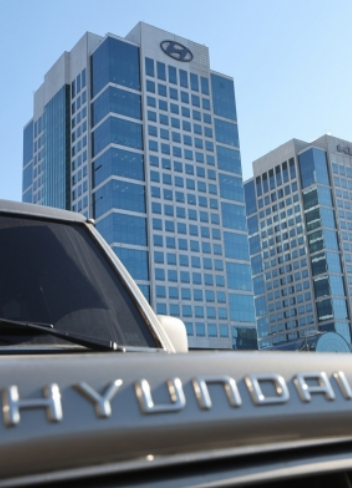

SEOUL– Hyundai Motor Group said on Monday it will unveil its artificial intelligence robotics strategy at the Consumer Electronics Show 2026 and debut its next-generation humanoid robot, Atlas, developed by its U.S.-based subsidiary Boston Dynamics.
The group will deliver a keynote presentation on January 5 at the Mandalay Bay Convention Center in Las Vegas under the theme “Partnering Human Progress: AI Robotics, from the Lab to Life.”
The session will showcase advanced AI robotics technologies, approaches to human-robot collaboration, and Hyundai Motor Group’s plans to build a group-wide AI robotics ecosystem. Live demonstrations are expected to highlight how the company’s robotics technologies can be applied in real-world environments.
A major highlight of the keynote will be the on-stage debut of Atlas, which the company said represents a key example of how its AI robotics capabilities can move beyond research labs into everyday use.
Hyundai Motor Group will also outline its vision for integrating robotics into manufacturing through its software-defined factory concept. The strategy focuses on combining robotics and software to position the group as a comprehensive provider of AI-based production solutions.
Separately, the group said it is advancing plans to strengthen its electric vehicle competitiveness by establishing a large-scale battery research and development center in South Korea.
Hyundai Motor recently held a topping-out ceremony for the Future Mobility Battery Campus in Anseong, about 70 kilometers south of Seoul, marking steady construction progress since work began in January 2025.
The company has invested 1.2 trillion won, or about $818 million, in the facility, which spans 111,000 square meters. The campus is scheduled for completion by the end of 2026 and is expected to serve as Hyundai Motor Group’s first comprehensive battery R&D hub.
The new facility will enable the company to internalize core battery capabilities and integrate battery technology research functions as part of its broader push into next-generation mobility. (Source: IANS)