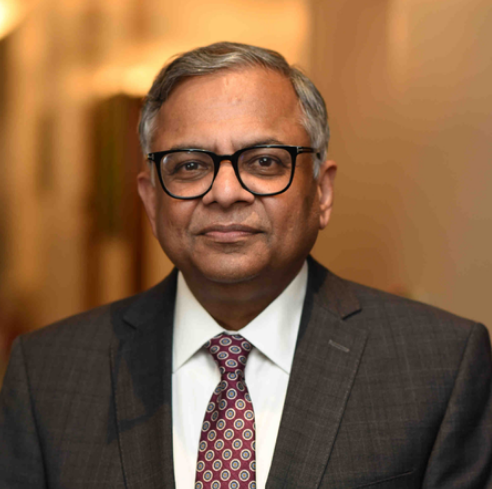

New Delhi — Tata Consumer Products Limited Chairman N. Chandrasekaran said the global business environment is being reshaped by geopolitical developments, supply chain realignments, the energy transition, rapid advances in artificial intelligence and climate-related risks.
Addressing shareholders at the company’s annual general meeting, Chandrasekaran said businesses are operating in an increasingly complex world and are responding by focusing on resilience, productivity and trust-based decision-making.
“TCPL is leveraging AI across several areas of its operations, including accelerating product development cycles, improving demand forecasting, tracking emerging consumer preferences, optimising supply chains and driving innovation,” he said.
He said artificial intelligence is helping Tata Consumer Products improve product development, better identify consumer trends and strengthen supply chain operations.
Commenting on the broader economic outlook, Chandrasekaran said the year began on a positive note, supported by developments such as the India-European Union trade agreement and the interim India-U.S. trade deal. However, he said the outbreak of conflict in West Asia in early March raised concerns about stagflation, marked by slower growth and rising inflation.
Despite global uncertainty, Chandrasekaran said India remains well positioned for growth.
“India remains the fastest-growing major economy, led by its demographic strength, expanding digital infrastructure and rising aspirations. It continues to offer strong growth and a large market,” he told shareholders.
He said consumer behavior in India is changing rapidly as evolving lifestyles, new retail formats and digital commerce reshape shopping habits. These shifts, he said, are creating major opportunities for companies that can combine consumer-focused strategies with innovation, execution and trusted brands.
Chandrasekaran also highlighted Tata Consumer Products’ evolution from a company largely focused on tea and salt into a diversified fast-moving consumer goods business.
He said the FMCG sector is seeing rapid growth in new-age sales channels, particularly quick commerce, which is expanding faster than traditional retail formats. According to the company, emerging channels now account for more than 35 percent of its India business.
At the same time, Chandrasekaran said traditional retail remains the backbone of the company’s go-to-market strategy. (Source: IANS)