
Washington — India’s efforts to position itself as a global manufacturing hub are showing early results as international supply chains diversify, with the International Monetary Fund saying it sees clear gains for the country, especially in electronics manufacturing.
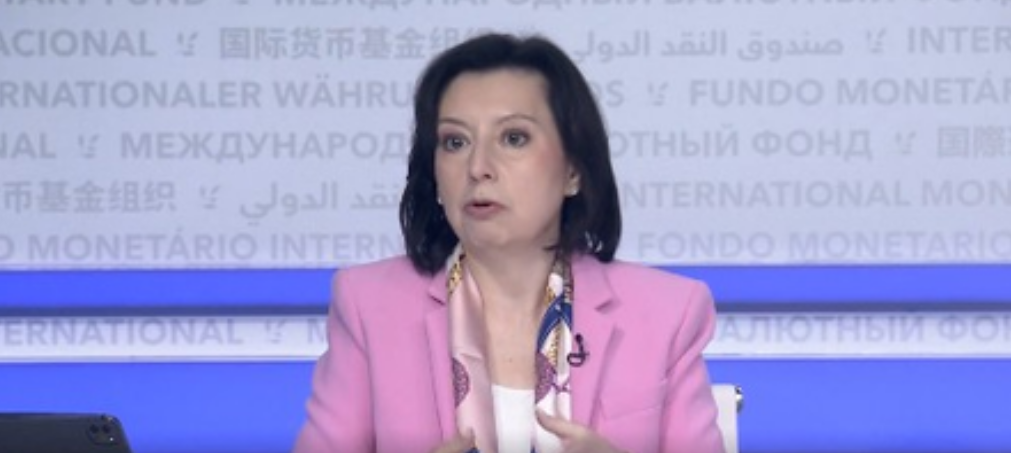
Julie Kozack, director of the IMF’s communications department, said at the Fund’s regular press briefing that India is benefiting from the shift, though the impact has so far been concentrated in select industries.
“We do see evidence of supply chain diversification benefiting India,” Kozack said. “The gains so far have been concentrated in some specific sectors, most visibly in electronics.”
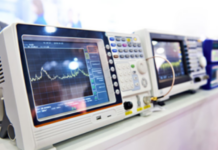
Kozack said India’s electronics exports “rose by 24 per cent in fiscal year 2025-26” and that smartphones have become one of the country’s largest export products.
She also said much of the recent manufacturing expansion appears to be driven by Indian companies rather than foreign investors.
“Much of this increase in production for exports appears to be happening through domestic contract manufacturers rather than foreign direct investment,” Kozack said.
Her remarks came in response to a question on whether the IMF sees international companies meaningfully diversifying manufacturing operations to India as businesses seek to reduce supply chain risks.
Kozack also reiterated the IMF’s view that India remains one of the world’s strongest-performing major economies.
“India is one of the fastest growing economies in the world. It remains a key engine of growth for the world,” she said.
The IMF’s latest World Economic Outlook update projected India’s economy to grow 6.4 percent in fiscal year 2026-27, with growth expected to rise to 6.7 percent in 2027. The Fund also said India’s risk outlook is more balanced than it was earlier this year.
Asked whether that pace of growth would be enough for India to achieve its goal of becoming a developed nation by 2047, Kozack said the country would need sustained rapid expansion over a long period.
“Achieving developed nation status would require India to continue to have very high, sustained high growth levels over a long period of time,” she said, adding that outcomes would also depend on factors such as population growth and currency movements.
Kozack said India has made “significant progress in structural reforms in recent years,” citing the implementation of a new labor code, new trade agreements and deregulation at the state level.
To maintain its growth trajectory, she said India should continue reforms aimed at strengthening workforce skills, increasing labor market flexibility, reducing business compliance costs and deepening trade integration.
“India would need to continue on the path of reforms,” Kozack said. “We encourage India to build on this progress.”
India has increasingly positioned itself as an alternative manufacturing destination as global companies look to diversify production beyond traditional supply chains. Government initiatives such as Production Linked Incentive schemes and investment in manufacturing infrastructure have helped expand domestic production in sectors including electronics, semiconductors and renewable energy equipment.
The IMF’s assessment comes as New Delhi continues to pursue its long-term goal of becoming a developed economy by 2047. Economists have said achieving that objective will require sustained high growth, productivity gains, greater private investment and deeper integration with global supply chains. (Source: IANS)