
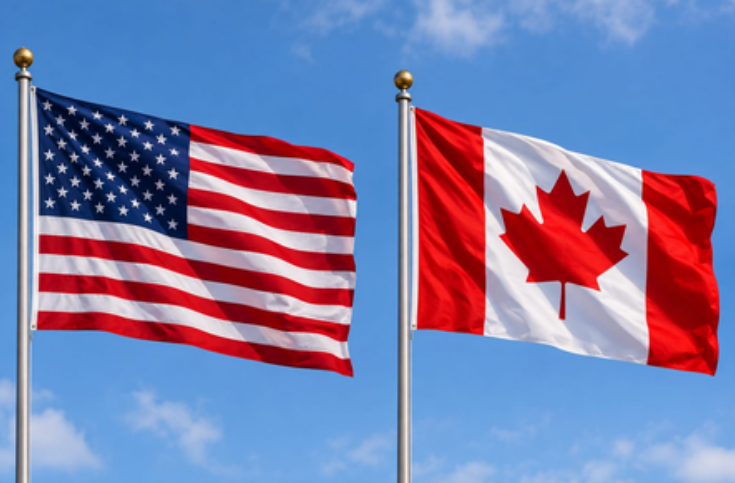

Washington — The United States on Tuesday began enforcing new import bans on certain Canadian alcohol, dairy and other products, expanding a trade dispute between the neighboring countries.
The restrictions, announced by President Donald Trump on Sept. 8, took effect at 12:01 a.m. Eastern time on Sept. 29. They follow earlier 50% tariffs on many of the same products.
The Trump administration said the measures were imposed in response to what it described as discriminatory Canadian trade practices affecting U.S. commerce.
Trump used Section 338 of the Tariff Act of 1930 to impose the restrictions. The law allows the president to restrict imports from countries found to be discriminating against American commerce.
The new measures prohibit imports of specified Canadian alcoholic beverages and dairy products that had previously been subject to additional 50% duties. Products imported before Sept. 29 but not yet entered for consumption remain subject to the earlier tariff rate.
The administration has accused Canada of discriminating against U.S. alcoholic beverage exporters, dairy producers and automakers. In the case of alcohol, the White House said Canadian restrictions had limited the purchase, distribution or retail sale of U.S. products while not applying comparable restrictions to goods from some other countries.
The latest action comes amid a broader series of tariffs and retaliatory trade measures between Washington and Ottawa, affecting industries ranging from agriculture and manufacturing to automobiles and construction materials.
Several Democratic senators from states with significant trade ties to Canada have criticized the escalation.
“The states we represent rely on Canada as a key trading partner and our primary export market,” Sens. Amy Klobuchar, Chris Coons, Patty Murray, Jeanne Shaheen and Elissa Slotkin said in a joint statement.
The senators said higher trade barriers could raise costs for businesses and consumers, including for construction materials, automobiles, aircraft, machinery and household goods. They also warned that farmers and small businesses could face additional pressure from the dispute.
Canada and the United States have deeply integrated supply chains, particularly in the automotive, energy, agriculture and manufacturing industries, meaning trade restrictions can have effects on businesses on both sides of the border.
The two countries, along with Mexico, have traded under the U.S.-Mexico-Canada Agreement since 2020. While the agreement preserves largely tariff-free trade across North America, governments can still use other trade laws to impose tariffs and import restrictions under certain circumstances. (Source: IANS)