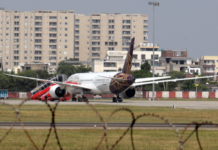

NEW DELHI — Air travel to the Gulf region remains disrupted as escalating tensions in the Middle East and continued Houthi missile and drone attacks have prompted airlines to cancel flights and alter routes over security concerns.
Despite the resumption of operations at Riyadh’s King Khalid International Airport late last week, several international carriers continue to restrict services to affected destinations, creating travel disruptions for passengers flying between India, the Gulf and Western countries.
The European Union Aviation Safety Agency (EASA) has extended its warning against flying over parts of the Gulf region, including waters surrounding the United Arab Emirates, Bahrain, Kuwait, Oman and Qatar, until at least November 16.
The advisory applies to European Union airlines and non-EU carriers authorized to operate flights to, from or within the bloc.
“The possible use of missiles, drones, combat aircraft and air-defence systems creates a high risk to civil flights at all altitudes and flight levels within the concerned airspace,” the agency warned.
The heightened security risks have prompted several international airlines to suspend services or reroute flights to avoid Iranian, Iraqi, Israeli and other Gulf airspace.
Indian carriers have also extended flight cancellations to major Saudi Arabian destinations.
Air India and Air India Express have suspended flights to and from Riyadh, Jeddah and Dammam through October 24. The Tata Group-owned airlines said they are closely monitoring regional developments before deciding when to resume operations.
Passengers affected by the cancellations have been advised to review the airlines’ latest travel advisories for information about refunds and rebooking options.
IndiGo has also canceled flights connecting Riyadh, Jeddah, Dammam and Madinah through October 24, urging travelers to confirm their flight status before heading to the airport.
Akasa Air has suspended services to Riyadh through October 24 and flights to Jeddah through October 21. The airline has advised affected passengers to check cancellation notifications and available travel alternatives.
The continuing disruptions have created uncertainty for travelers, particularly those connecting through Gulf aviation hubs to destinations in Europe and other Western markets.
Airlines are expected to continue reviewing their schedules as the regional security situation develops, with the possibility of further changes depending on airspace restrictions and operational risks. (Source: IANS)