
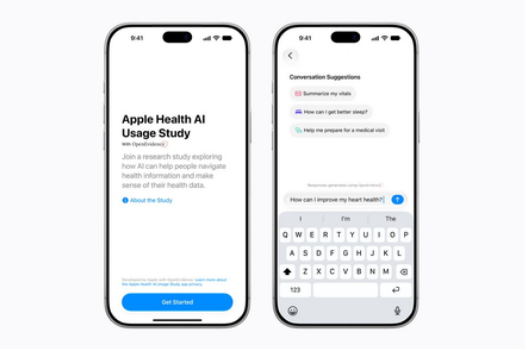
NEW DELHI–Apple has introduced a new research application designed to examine how consumers use artificial intelligence to obtain medical information, evaluate the accuracy of AI-generated responses and make decisions about their health.
The Apple Health AI Study App, developed in collaboration with healthcare AI company OpenEvidence, will investigate how AI-powered tools can help individuals better understand medical conditions, interpret health information and prepare for conversations with healthcare professionals.
The application allows participants to submit health-related questions and receive responses informed by medical research and clinical guidelines. Answers include references to supporting scientific literature, allowing users to examine the sources behind the information provided.
The app draws on established medical publications, including The New England Journal of Medicine, the Journal of the American Medical Association and Nature, to provide research-backed information.
It is also designed to translate complicated medical terminology and scientific findings into language that is easier for consumers to understand.
The study will enroll up to 200,000 participants in the United States who have eligible Apple Intelligence-enabled iPhones, including the iPhone 15 Pro and compatible newer models running iOS 26 or later.
Apple has not indicated whether the research program will eventually expand to international markets, including India, or whether the findings could influence the development of new AI-powered health features across its product lineup.
Interested users can download the dedicated research application from Apple’s App Store to review information about the study and determine whether they want to participate.
One of the central areas of investigation is whether AI-generated medical explanations become more useful when combined with an individual’s personal health information.
Participants can voluntarily share selected information stored in Apple’s Health app through HealthKit, the company’s framework for managing health and fitness data.
The information may include resting heart rate, physical activity, sleep patterns and laboratory test results.
Researchers will examine whether incorporating these personal health measurements enables AI systems to deliver responses that are more relevant to individual circumstances and easier for users to interpret.
Another focus of the study is how artificial intelligence might help patients prepare for medical appointments.
By allowing individuals to research symptoms, understand medical terminology and review relevant health information before seeing a healthcare professional, the technology could potentially support more informed discussions between patients and physicians.
The research will also evaluate whether AI-generated information helps participants recognize situations in which they should seek additional medical advice or follow up with a healthcare provider.
Apple said the study incorporates privacy safeguards intended to give participants control over the personal information they choose to share.
Users can decide whether to provide HealthKit data and survey responses, and participation in the research is voluntary.
The company also said information collected through the study will not be used to train artificial intelligence models.
The initiative comes as technology companies increasingly explore the use of generative AI in healthcare, particularly for helping consumers navigate complex medical information.
The findings could provide insight into how people interpret AI-generated health recommendations, how much they trust those responses and whether personalized medical information can improve their understanding of health-related issues.
The study may also help researchers identify opportunities and limitations in using AI as an informational resource alongside traditional healthcare services. (Source: IANS)