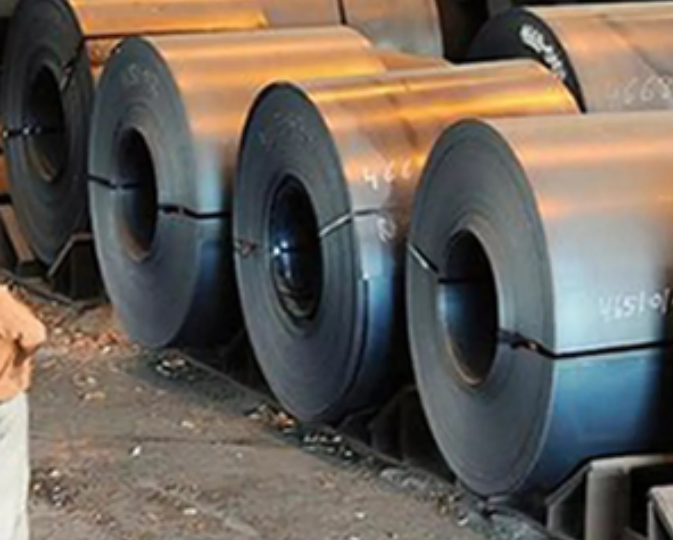
Mumbai— India’s steel industry is expanding at a pace that surpasses both China and the global average, positioning the country to meet its ambitious target of achieving 300 million tonnes per annum (MTPA) of crude steel capacity by FY2030-31, according to a new report released Thursday by MP Financial Advisory Services LLP (MPFASL).
Between 2016 and 2024, India’s steel production recorded a compound annual growth rate (CAGR) of approximately 5 percent — significantly higher than China’s 2.76 percent and the global average of 1.77 percent. Since 2020, India’s growth has accelerated further, posting an 8 percent CAGR during a period when China’s production began to decline.
The report attributes this divergence to India’s abundant raw material reserves, competitive labor costs, and supportive government policies, which have elevated the country’s stature in the global steel landscape.
As of FY2024-25, India has reached an installed steel capacity of 205 MTPA. Looking ahead, major steel producers have proposed expansion plans totaling 167 MTPA by 2031, signaling strong momentum toward the national goal.
However, the sector also faces several structural challenges. These include the need for improved iron ore beneficiation, heavy dependence on imported coking coal (about 85 percent), limited domestic steel scrap availability, and high carbon dioxide emissions associated with steelmaking.
India’s per capita steel consumption currently stands at 93.4 kg — significantly below the global average of 219 kg. The report anticipates a sharp rise in domestic consumption as the country ramps up investments in infrastructure, affordable housing, and manufacturing. Meeting this rising demand will require rapid capacity expansion and continued modernization.
To achieve the 300 MTPA target by FY2030-31, the report outlines a five-pronged strategy: increased investment in green and value-added steel, improved infrastructure and raw material supply chains, adoption of clean technologies, streamlined financing and policy frameworks, and robust public-private collaboration.
India is currently the world’s second-largest steel producer, trailing only China, which accounts for over half of global output. But India’s strong production growth, industrialization, infrastructure boom, and shifting global supply chains are driving a fundamental transformation of its steel sector.
With the right strategic execution, India is on track to not only meet its 2030 goals but also to become a key global hub for sustainable and value-added steel production. (Source: IANS)