
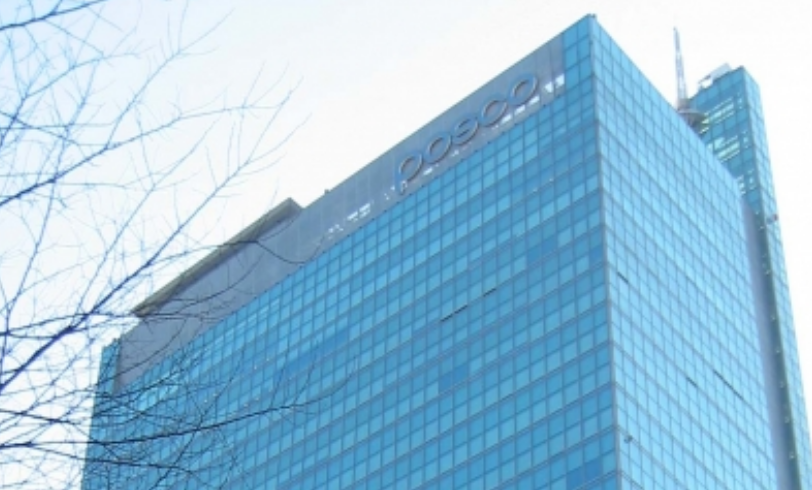
SEOUL— The U.S. Court of International Trade (CIT) has ruled in favor of South Korea’s POSCO in its challenge to countervailing duties imposed by the U.S. Department of Commerce on the steelmaker’s carbon and alloy steel plates.
In December 2023, the Commerce Department levied a 0.87% countervailing tariff on POSCO, alleging that the company benefited from government subsidies that allowed it to sell steel at artificially low prices in the U.S. market. Washington argued that Korea’s low industrial electricity rates constituted a subsidy, and claimed POSCO received additional carbon emission permits, both of which it considered countervailable benefits.
The CIT rejected these claims, finding that heavy electricity consumption alone does not demonstrate a “disproportionate” subsidy and that Commerce “unreasonably” grouped the steel industry with unrelated sectors such as semiconductors and petrochemicals. The court also agreed with Korea’s position that extra carbon emission permits under the national trading system do not represent forfeited government revenue, and that no specific enterprise or industry received preferential allocation.
Following the ruling, the Commerce Department must revisit its determinations on the electricity subsidy’s specificity and POSCO’s emissions permits, and submit a revised finding to the CIT within 60 days.
Separately, POSCO Future M Co., the battery materials arm of POSCO Holdings, announced a memorandum of understanding with China’s CNGR Advanced Material Co. to collaborate on battery materials projects. The deal, joined by CNGR’s Korean subsidiary Fino, aims to expand POSCO Future M’s cathode material portfolio beyond nickel-cobalt-manganese (NCM) and nickel-cobalt-manganese-aluminum (NCMA) batteries to include lithium manganese-rich (LMR) and lithium iron phosphate (LFP) chemistries. (Source: IANS)