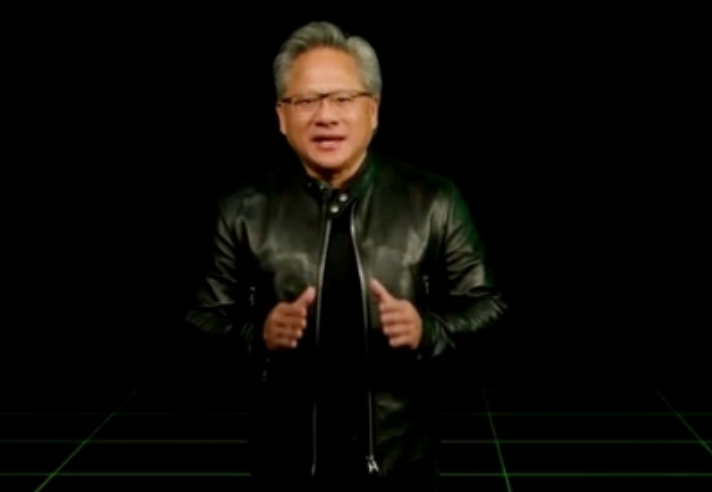
SEOUL, South Korea — Nvidia CEO Jensen Huang said on Friday that South Korea has the potential to emerge as a global leader in “physical AI,” the next major frontier in artificial intelligence technology, citing the country’s strong capabilities in software, science, and manufacturing.
“AI has now achieved the virtuous cycle,” Huang said during a special session at the Asia-Pacific Economic Cooperation (APEC) CEO Summit in Gyeongju, marking his first visit to South Korea in 15 years. “AI has penetrated into people’s lives, inducing more usage, which leads to more profit for companies, which ultimately leads to better AI. For Korea, this is an extraordinary opportunity.”
Huang described South Korea as one of the few nations that possess all three “fundamental, essential, and necessary” qualities to succeed in the AI era — software expertise, advanced technical and scientific capabilities, and world-class manufacturing. “When you combine software, AI technology, and manufacturing, you have the opportunity to truly take advantage of robotics. This is the next generation of physical AI,” he said.
Physical AI refers to the integration of artificial intelligence into physical systems such as robots, machines, and autonomous vehicles. The technology aims to enable seamless collaboration between humans and intelligent machines, transforming industries and daily life.
Huang emphasized that South Korea is a key partner in Nvidia’s global AI vision and announced plans to deepen collaborations with major Korean companies. Nvidia will deploy up to 260,000 graphics processing units (GPUs) in South Korea through partnerships with the government and corporate giants including Samsung Electronics, SK Group, Hyundai Motor Group, and Naver Cloud.
Under the plan, Samsung, SK, and Hyundai Motor will each install up to 50,000 GPUs, while Naver Cloud will add around 60,000, increasing the nation’s total AI GPU capacity from about 65,000 to more than 300,000 units. The new Blackwell-based infrastructure will position South Korea as one of the largest AI computing hubs outside the United States.
“Now we are going to advance AI together, build AI factories together, and build digital twins together,” Huang said.
Speaking at a separate press conference, the Nvidia chief said the new initiative would transform South Korea into a regional AI hub, attracting startups and companies from across Asia. He also praised Samsung Electronics and SK hynix for their innovation in high-bandwidth memory (HBM) technologies critical to AI computing.
“I am 100 percent confident that Samsung and SK hynix will be long-term partners,” Huang said. “We will continue to work incredibly closely to advance the future of memory technology. Korea is world class in memory technology.”
He added that while SK hynix excels in memory specialization, Samsung’s strength lies in its technological diversity.
The APEC CEO Summit, which concluded its three-day session following Huang’s address, served as the business segment of the annual APEC Leaders’ Summit held this year in Gyeongju. (Source: IANS)