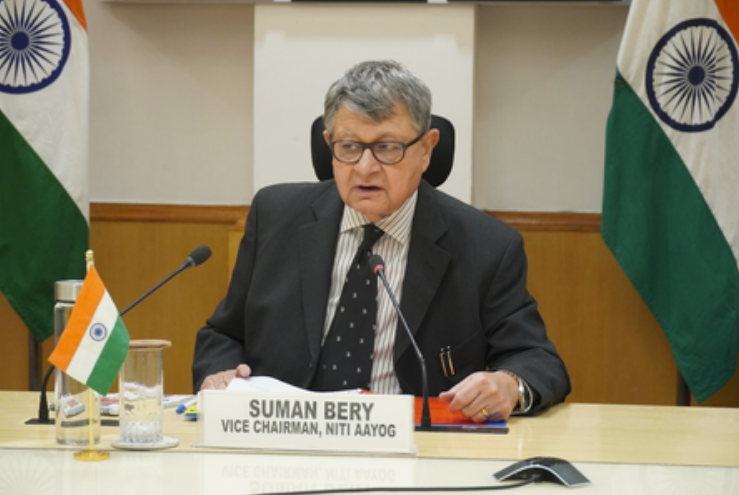

NEW DELHI, India — India’s push toward becoming a developed nation must be rooted in affordable, sustainable, and resilient energy systems, NITI Aayog Vice Chairman Suman Bery said Thursday at an energy security conference hosted by the Confederation of Indian Industry (CII).
Bery said the country’s Viksit Bharat vision extends beyond economic growth to the creation of an inclusive society supported by accessible and secure energy. “Energy security is not just about ensuring supply, it is about affordability, diversification, and resilience,” he said. “The future will not be about breakthrough technologies, but about existing technologies breaking through at scale — solar, hydrogen, and renewables made affordable and accessible.”
He noted that India’s hydrocarbon market structure “needs careful rethinking,” emphasizing that a balanced combination of public and private participation will be essential for improving efficiency, fostering innovation, and strengthening long-term resilience.
Bery stressed that India’s climate commitments stem from “conviction, not compulsion,” but said the country must balance environmental goals with affordability and industrial competitiveness. With global energy markets increasingly unpredictable, he added that securing India’s interests also involves ensuring that decisions made abroad do not narrow India’s strategic options.
While India has made substantial progress in expanding electricity access, Bery warned that rising system costs could undermine long-term energy affordability. “Owning resources abroad does not necessarily guarantee energy security,” he said, arguing instead for diversification in supply sources, technology pathways, and ownership models.
He said energy security should be treated as an integrated policy challenge rather than narrowly focused on supply. “The real test of our energy system will be whether we can build scale in new technologies without creating price barriers for growth,” he said.
Piyush Gangadhar, Joint Secretary at the Ministry of External Affairs, also spoke at the event, highlighting the geopolitical and commercial challenges shaping global energy security. He pointed to evolving policies such as the EU’s Carbon Border Adjustment Mechanism (CBAM), which he said are reshaping investment flows and influencing global energy trade.
Gangadhar said India’s strategy combines diversification of supply, strategic global partnerships, and targeted international investments. India has deepened energy ties with the United States, Africa, and Latin America while exploring innovative methods for securing critical resources.
He emphasized that self-reliance in energy should be built on “openness, cooperation, and strategic foresight,” citing India’s leadership in the International Solar Alliance, the Global Biofuels Alliance, and new supply-chain partnerships under the Quad. Gangadhar added that India is pursuing full membership in the International Energy Agency to strengthen its role in shaping the global energy conversation. (Source: IANS)