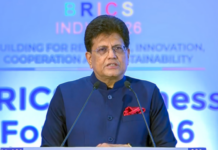

New Delhi, India — India’s ambitious semiconductor program is entering a new phase as private capital begins flowing into the sector, marking a shift beyond government-led initiatives, Union Minister Ashwini Vaishnaw said on Thursday.
Speaking at Bloomberg’s New Economy Forum in Singapore, Vaishnaw said the combination of a state-backed semiconductor push, a robust design ecosystem, and a large pool of engineering talent is creating growing confidence among global chipmakers.
“India’s sweeping state-backed semiconductor drive — coupled with its growing design ecosystem and deep bench of engineering talent — is helping the country reach a stage where private capital begins to flow in on its own,” Vaishnaw said.
He added that India aims to bring its semiconductor manufacturing capabilities on par with major chip-producing nations by 2032. The 2031–2032 period, he said, will be when India reaches the level many established countries occupy today, positioning the nation for a fair and competitive global race.
Although India’s semiconductor program is still in its early stages, Vaishnaw noted that the government has significantly increased spending to attract chip designers and manufacturers. A $10 billion incentive fund has spurred the launch of several assembly, packaging and testing projects.
“Micron Technology has already set up a plant in Gujarat, while Tata Group is among 10 companies preparing to fabricate silicon within the country,” he said.
Three of India’s semiconductor facilities are expected to begin commercial production early next year, according to the minister. He said the strong government push, combined with India’s expanding technical talent base, is creating a stable foundation for long-term private sector involvement — similar to how subsidies helped Apple and its suppliers scale up iPhone production in India.
“India’s approach of a common and affordable compute facility is ensuring democratization of technology,” Vaishnaw added. (Source: IANS)