
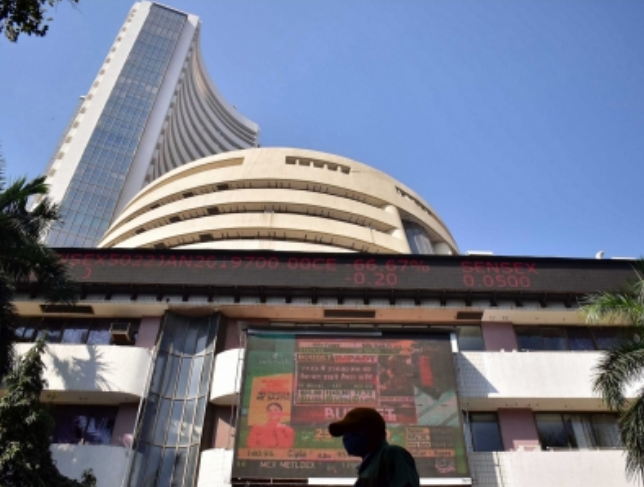
MUMBAI, India — Indian equity benchmarks ended sharply lower on Friday after surrendering early gains, pressured by sustained selling from foreign institutional investors and a cautious investor outlook.
The Sensex dropped 769 points, or 0.94 percent, to close at 81,537, while the Nifty fell 241 points, or 0.95 percent, to settle at 25,048.
Broader markets underperformed the benchmarks, with the Nifty Midcap 100 declining 1.95 percent and the NSE Smallcap 100 sliding 2.06 percent, reflecting heightened risk aversion across market segments.
Both the Sensex and Nifty opened marginally higher, tracking positive global cues after geopolitical tensions linked to Greenland eased. However, the early momentum faded as heavy foreign selling and mixed corporate earnings prompted investors to turn cautious.
All sectoral indices ended in negative territory. Realty stocks led the losses, with the Nifty Realty index falling 3.42 percent. The Nifty Media index dropped 2.79 percent, while Nifty PSU Bank declined 2.43 percent. Nifty Auto eased 1.25 percent, and Nifty Oil and Gas slipped 1.30 percent.
Market analysts said the sell-off came despite supportive domestic purchasing managers’ index data and relatively positive global markets. Sentiment was dampened by rising crude oil prices, a sharp depreciation in the rupee, continued foreign institutional investor outflows, and corporate earnings that marginally missed expectations amid elevated market valuations.
Looking ahead, analysts expect market sentiment to remain cautious as investors await the upcoming Union Budget and the U.S. Federal Reserve’s interest rate decision. They added that even if some companies deliver stronger-than-expected results for the third quarter of FY26, any upside may remain limited to stock-specific moves as foreign selling pressure is likely to persist.
Meanwhile, the rupee weakened sharply, falling 41 paise to an intraday low of 91.99 against the U.S. dollar on Friday, dragged down by ongoing foreign fund outflows.
Analysts noted that while intervention by the central bank has helped contain volatility to some extent, it has not been sufficient to reverse the broader downward trend in the domestic currency. (Source: IANS)