
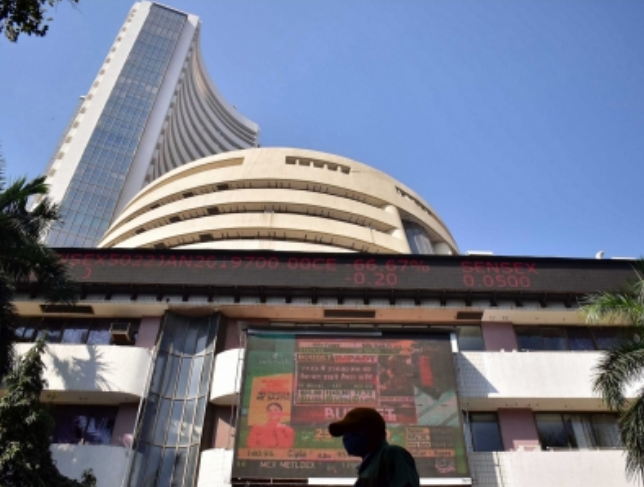

MUMBAI — Indian equity markets recorded their sharpest decline in a month on Thursday as benchmark indices extended losses for a fourth straight session, weighed down by mounting concerns over rising trade tensions between India and the United States.
Investor sentiment turned cautious after reports suggested the administration of U.S. President Donald Trump could consider imposing steep tariffs of up to 500 percent on Indian goods, sparking fears of a significant hit to trade and exports.
The prospect of aggressive trade measures triggered broad-based selling across sectors, leading to heightened risk aversion in the market.
By the close of trading, the Sensex fell 780.18 points, or 0.92 percent, to settle at 84,180.96. The Nifty declined 263.9 points, or 1.01 percent, to end at 25,876.85.
“A sustained close below 25,900 increases the probability of further downside toward the 25,800–25,700 zone, while a recovery above 26,000 is essential to stabilize near-term sentiment,” an analyst said.
The expert added that despite the current correction, the broader weekly and monthly trend structure remains positive, though short-term pressure could persist if key support levels fail to hold.
Among Sensex constituents, TCS, Tech Mahindra, Larsen & Toubro, Reliance Industries, and Tata Steel were among the top losers. Eternal, ICICI Bank, Bajaj Finance, and BEL were the only stocks to end the session in positive territory.
The sell-off was more pronounced in the broader market, with mid- and small-cap stocks seeing sharp declines. The Nifty Midcap 100 and Nifty Smallcap 100 indices each fell close to 2 percent.
Sectoral indices ended broadly lower, with metal stocks bearing the brunt of the decline. The Nifty Metal index dropped more than 3 percent, while the Nifty Oil and Gas index slid around 2.8 percent.
Public sector banking and IT stocks were also among the major laggards, falling about 2 percent each.
Analysts said market sentiment remains fragile as investors continue to assess global trade uncertainties and the potential impact of higher tariffs on India’s export-oriented sectors. (Source: IANS)