WASHINGTON — India’s economic outlook remains strong, but rising global energy prices—especially if prolonged—could pose a significant risk, the International Monetary Fund said Monday.
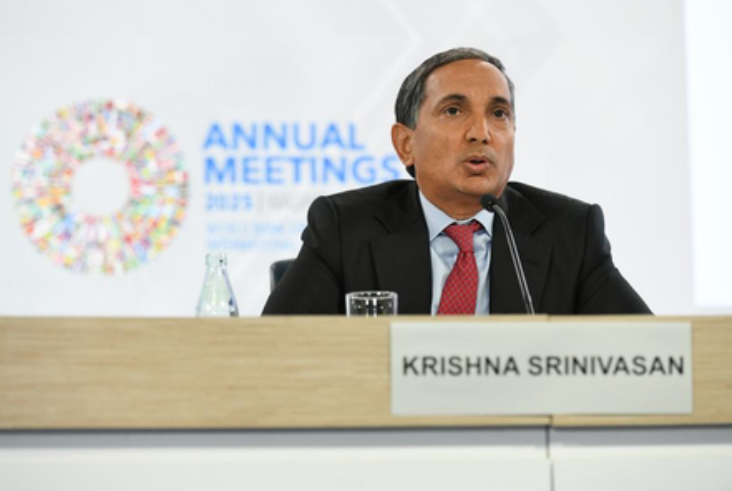
Krishna Srinivasan, Director of the IMF’s Asia and Pacific Department, said the institution has slightly upgraded its growth forecast for India, citing solid momentum heading into 2026 and easing tariff pressures.
“We have modestly increased our forecast by 0.1 percentage point,” Srinivasan said during a press briefing at the IMF-World Bank Spring Meetings.
He noted that economic activity has been supported by a reduction in tariffs “from 50 to 10 percent,” along with sustained domestic demand and the continued benefits of earlier tax reforms.
“Momentum coming into 2026 was strong,” Srinivasan said.
Despite the positive outlook, the IMF cautioned that escalating tensions in the Middle East could disrupt the trajectory, particularly through higher oil and gas prices.
“If this shock intensifies both in terms of duration and expands beyond just oil and gas, that could be disruptive for India,” Srinivasan said.
India remains highly dependent on energy imports, making it vulnerable to spikes in global oil and gas prices. Higher energy costs can drive inflation and widen the country’s current account deficit, adding pressure to the broader economy.
On fiscal policy, the IMF said India has maintained a disciplined approach, building financial buffers that could help cushion the impact of external shocks.
“They’ve been very prudent on their fiscal. They have built buffers over the years, and they’ve been able to provide support,” Srinivasan said.
He emphasized that those buffers will be crucial if global conditions deteriorate further. “If this intensifies, it’ll get worse for all countries, including for India,” he added.
The IMF also urged policymakers across Asia to allow markets to adjust while offering targeted, temporary support to vulnerable populations.
Remittance flows, a key source of foreign exchange for India, have remained stable despite geopolitical tensions, Srinivasan said.
“Remittances have held pretty strong, pretty robust,” he said, noting that many workers from India and other Asian countries have continued working in the Middle East. He added that reconstruction efforts in the region could help sustain those flows.
Still, the IMF warned that broader spillover effects from the conflict could disrupt trade, supply chains, and commodity markets, increasing uncertainty for policymakers.
India has been among the fastest-growing major economies in recent years, driven by strong domestic consumption, public investment, and structural reforms. However, its reliance on imported crude oil has historically made it vulnerable to global price swings, underscoring the importance of external developments to its economic outlook.