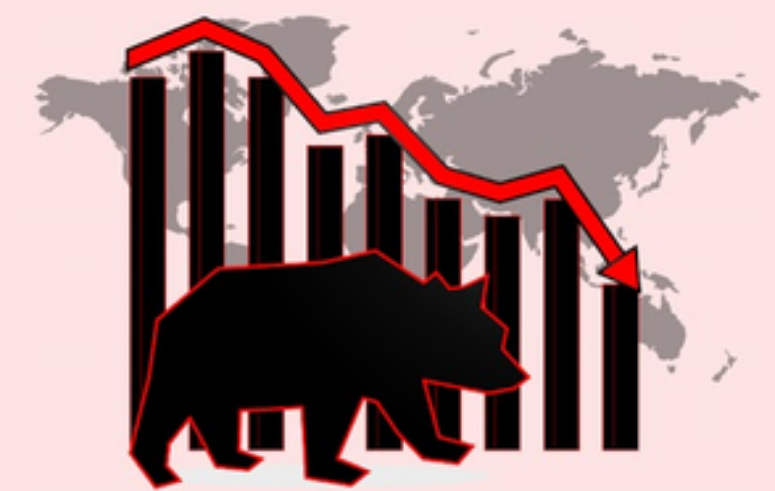

MUMBAI — Indian stock markets closed lower on Wednesday, snapping a three-day winning streak as weakness in IT stocks and rising geopolitical tensions in West Asia weighed on investor sentiment.
The Nifty fell 198.50 points, or 0.81 percent, to close at 24,378.10, while the Sensex declined 756.84 points, or 0.95 percent, to settle at 78,516.49.
Market participants pointed to ongoing uncertainty in West Asia, particularly stalled talks between the United States and Iran, as a key factor behind the decline.
Analysts said the Nifty continues to face resistance in the 24,500–24,600 range. “On the downside, the 24,350–24,300 zone remains a critical near-term support area; a breach below this range could accelerate downside momentum towards the 24,100–24,000 levels,” an analyst said.
Despite the drop in benchmark indices, broader markets showed relative strength. The Nifty MidCap index rose 0.19 percent, while the Nifty SmallCap index gained 1.13 percent.
Sectorally, IT stocks were the biggest drag, with the Nifty IT index emerging as the worst performer of the day. Financial services and auto stocks also came under pressure, contributing to the overall weakness.
Global cues remained negative as geopolitical tensions persisted. The United States extended its ceasefire with Iran, but uncertainty continued after talks between the two sides failed to make progress. President Donald Trump described the Iranian government as “seriously fractured” while announcing the extension.
Concerns were further heightened by the continued blockade at the Strait of Hormuz, raising fears of potential disruptions to global oil supplies. Adding to the uncertainty, a planned meeting between Vice President JD Vance and Iranian officials did not take place, with Tehran reportedly declining further discussions.
Analysts said the combination of global uncertainty and sector-specific weakness kept domestic markets under pressure, even as broader indices managed modest gains.
“Indian equity markets traded with a clear negative bias throughout the session, weighed down by persistent geopolitical tensions in the Middle East and the continued closure of the Strait of Hormuz,” an analyst said. (Source: IANS)