
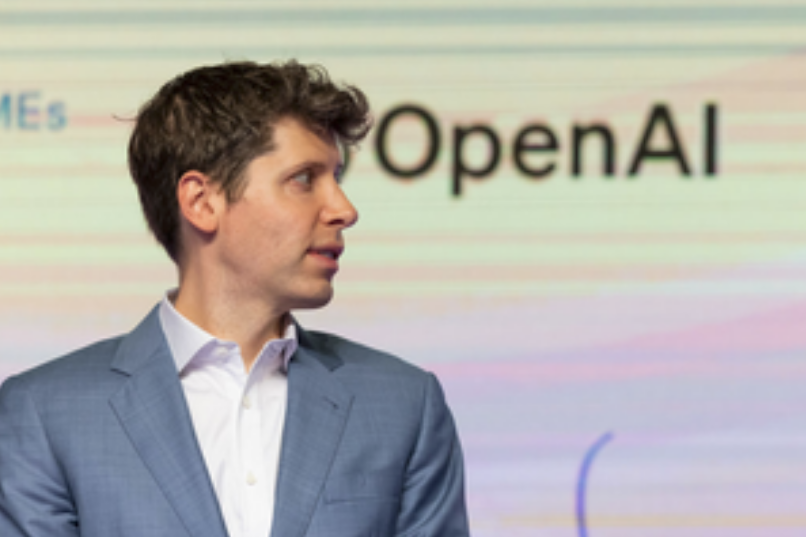
New Delhi — OpenAI CEO Sam Altman said a future generation of ChatGPT could become significantly more context-aware by drawing on information from a user’s computer activity, meetings, calls and other sources to provide more personalized assistance.
In an interview with Z Fellows founder Cory Levy, Altman described a vision of an AI assistant that could, with user permission, have broad context about a person’s work and communications.
He said such a system could “watch every meeting you’re in, record every call” and use the context users choose to share to provide more relevant suggestions and assistance.
Altman emphasized that users would control what information the AI could access. Rather than independently making decisions, the assistant could work alongside users, offer suggestions and perform tasks when authorized.
Users could potentially connect the system to text messages, email, documents, Slack and other sources, depending on the level of access they choose to provide.
Altman described how such an assistant could help a startup CEO dealing with more information than one person could reasonably track. The AI could provide assistance while the user writes a sales pitch or strategy document, flag potential mistakes and offer to complete certain tasks.
For example, while drafting a sales email, the assistant could draw on previous conversations with the customer, account history and relevant documents to suggest improvements in real time.
The concept would represent a shift from an AI system that mainly responds to individual prompts toward one that understands what a user is doing across multiple activities and uses that broader context to provide assistance.
“I think we’re only one model generation away from this actually being incredibly useful,” Altman said, adding that he hoped the technology would change the way he works.
OpenAI already offers ChatGPT features that can use information from previous conversations to provide more tailored responses, with users able to manage memory and chat history settings.
The company has also been developing desktop capabilities designed to give AI systems more context about a user’s workflow. Any expansion of those capabilities to continuously capture activity across screens, meetings or calls would raise significant questions around privacy, consent and how much information users choose to share with an AI assistant. (Source: IANS)