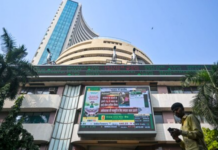

Mumbai — Indian equity markets ended lower as continued uncertainty surrounding negotiations over the Strait of Hormuz weighed on investor sentiment.
The Sensex fell 539 points, or 0.70%, to close at 76,933, while the Nifty declined 116 points, or 0.48%, to settle at 24,090.
The Nifty Bank index dropped 273 points, or 0.47%, to 57,509.
“Expiry-led volatility and the lack of a diplomatic breakthrough in the Middle East continue to keep markets range-bound in the near term. While a degree of higher energy prices is largely factored into earnings expectations, the recent moderation in crude oil prices and long-term bond yields is supporting the inflation outlook,” an analyst said.
Broader markets moved largely in line with the benchmarks. The Nifty Midcap 100 lost 0.10%, the NSE Smallcap 100 fell 0.13% and the Nifty Next 50 declined 0.21%.
Most sectoral indices on the NSE finished lower, with private banks, pharmaceuticals and consumer durables among the few sectors posting marginal gains.
The Nifty Cement index fell 1.33%, while PSU Bank declined 0.94%, Media dropped 0.89% and Metals lost 0.86%.
Analysts said the Nifty has slipped below a rising channel on the daily chart, signaling increased bearishness. The index has also fallen below its 50-day exponential moving average, suggesting that momentum has weakened.
The Indian rupee also traded lower against the U.S. dollar, with the dollar-rupee pair moving near 95.50 after touching a 10-day low of 95.40 in the previous session.
“Meanwhile, FII inflows and resilient earnings momentum remain supportive for Indian equities, particularly mid-caps, where several segments are relatively insulated from global uncertainties and continue to benefit from strong domestic demand trends,” a market participant said.
Investors are also watching the Federal Reserve chair’s upcoming Jackson Hole address for signals on inflation, interest rates and the broader monetary policy outlook. Any shift in expectations could influence global risk sentiment and capital flows into emerging markets. (Source: IANS)