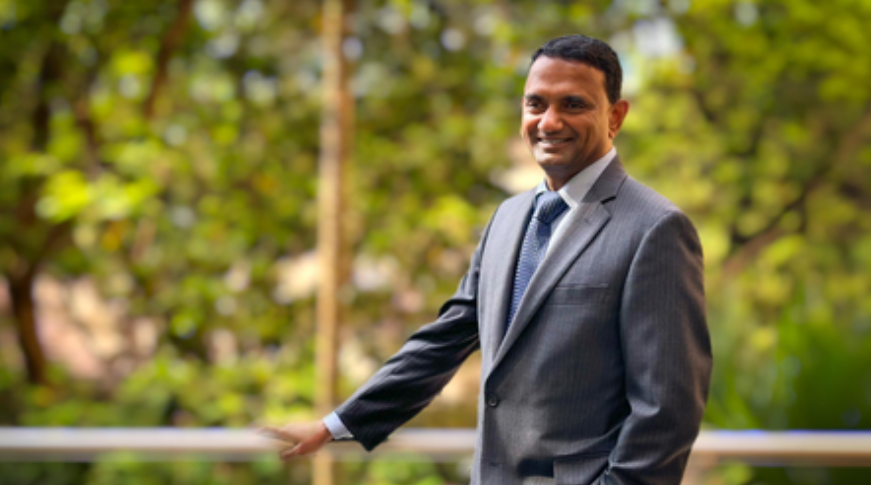

NEW DELHI, India — Tata Consultancy Services has asked its employees to actively use artificial intelligence to deliver work faster and at lower cost, even if it leads to short-term revenue loss, CEO K. Krithivasan said on Wednesday.
Speaking at the Nasscom Technology and Leadership Forum in Mumbai, Krithivasan said the company is encouraging associates to be transparent with clients about AI-driven efficiencies, even when that results in revenue cannibalisation.
He said employees should lean into AI adoption rather than resist it, adding that the company does not view artificial intelligence as a threat to jobs.
“Instead, the technology is expected to open up more opportunities, and those who embrace it will benefit the most,” he said.
The remarks come amid growing investor anxiety that artificial intelligence could disrupt India’s traditional labour-intensive IT services model, a concern that has weighed heavily on sector stocks.
The Nifty IT index has fallen 21 percent so far this month, putting it on track for its worst monthly performance in nearly 23 years. Around $68.6 billion in market value has been wiped out from the sector in February amid AI-related concerns.
TCS’s stance mirrors that of rival Wipro. Wipro’s Chief Strategist and Technology Officer Hari Shetty recently said rapid AI adoption is likely to boost demand for software services rather than reduce it.
Shetty added that artificial intelligence is expected to create more jobs than it eliminates. In an exclusive interaction with IANS, he described AI as one of the most significant technological shifts of modern times.
He compared the current wave of artificial intelligence to transformative breakthroughs such as the invention of electricity, the steam engine, and the internet.
“AI is one of the biggest technology opportunities that we have got. This is one of the major technology evolutions and a multi-dimensional opportunity,” Shetty told IANS, adding that it will reshape industries and economies worldwide. (Source: IANS)