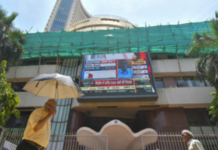


MUMBAI — Indian equity markets closed higher Wednesday but gave up a significant portion of earlier gains as a sharp rise in global crude oil prices dampened investor sentiment.
The benchmark Nifty ended at 24,177.65, up 0.76 percent, or 181.95 points, while the Sensex closed at 77,496.36, gaining 0.79 percent, or 609.45 points.
Analysts said the market remains at a critical technical level. On the upside, 24,200 is seen as the immediate resistance for the Nifty. On the downside, a break below the 24,000–24,100 range could weaken the near-term structure, with 23,900 identified as the next support level.
Investor optimism was tempered after Brent crude prices jumped more than 3 percent to $114.60 per barrel, heightening concerns about inflation and global supply disruptions.
The spike followed stalled negotiations between the United States and Iran, raising fears of tighter oil supply. Adding to market uncertainty, the United Arab Emirates said it will exit the Organization of the Petroleum Exporting Countries (OPEC) effective May 1, further fueling volatility in energy markets.
Despite the late-session pullback, gains in heavyweight stocks helped keep the benchmarks in positive territory. ITC, Tech Mahindra, and Maruti Suzuki India were among the top performers on the Nifty.
Broader markets showed mixed trends. The Nifty MidCap index slipped 0.07 percent, while the Nifty SmallCap index rose 0.65 percent.
Sector performance was uneven. FMCG and realty stocks led the gains, reflecting continued buying interest in consumption-driven and property-related companies. Meanwhile, construction and media stocks lagged, weighed down by sector-specific pressures and cautious sentiment.
Analysts said that although domestic equities managed to close in the green, rising crude prices and ongoing geopolitical tensions could limit further upside in the near term.
Markets are now expected to closely monitor signals from the U.S. Federal Reserve’s upcoming policy decision, with sentiment likely to remain volatile amid global developments and corporate earnings trends. (Source: IANS)