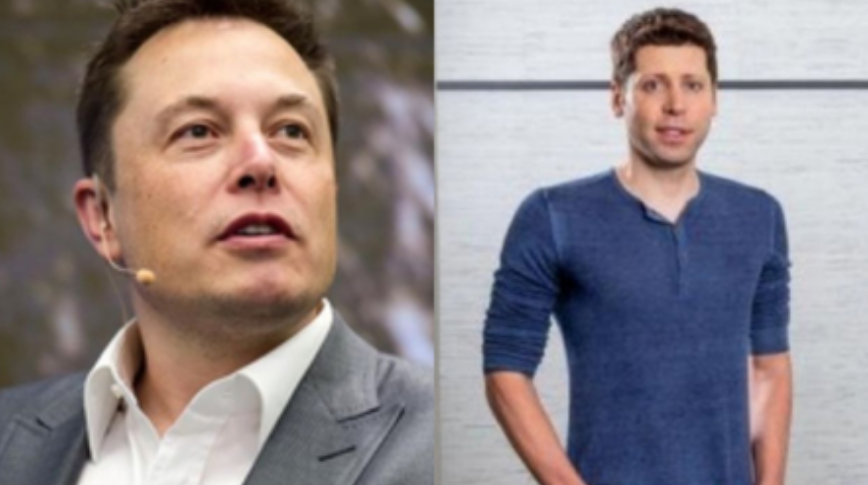

NEW DELHI — Elon Musk testified in a high-stakes U.S. court case against OpenAI, accusing the organization and its CEO Sam Altman of straying from their original nonprofit mission in favor of commercial interests.
The case, being heard in federal court in Oakland, centers on Musk’s claim that OpenAI has shifted away from its founding goal of developing safe artificial intelligence for the benefit of humanity and has instead become a profit-driven enterprise competing with major technology firms.
During his testimony, Musk said he supported OpenAI in its early years with the understanding that it would operate as a nonprofit focused on transparency and safety in AI development.
He warned that a ruling allowing what he described as the “looting” of a charity could weaken the broader foundation of philanthropy in the United States. Musk also said his early involvement with OpenAI was partly driven by concerns that companies like Google were not sufficiently focused on AI safety.
Musk told the court he played a significant role in OpenAI’s early growth, including helping recruit key talent and facilitating connections with major technology partners.
OpenAI has pushed back against the claims, arguing that its shift to a capped-profit model and reliance on external funding were necessary to handle the high costs of advanced AI research. The company maintains that its nonprofit arm continues to retain overall control.
The dispute marks a deepening rift between Musk and the organization he co-founded in 2015. Musk left OpenAI in 2018, after which the company established a commercial subsidiary and secured major investment, including from Microsoft.
Since then, OpenAI has become a major force in the global AI race, driven in part by the success of its chatbot ChatGPT.
Musk later launched his own artificial intelligence venture, xAI, and has pursued legal action seeking structural changes at OpenAI. He has said any financial compensation resulting from the case would not be for personal benefit.
A decision in the case is expected in the coming weeks and could have broader implications for how AI companies are structured and funded. (Source: IANS)