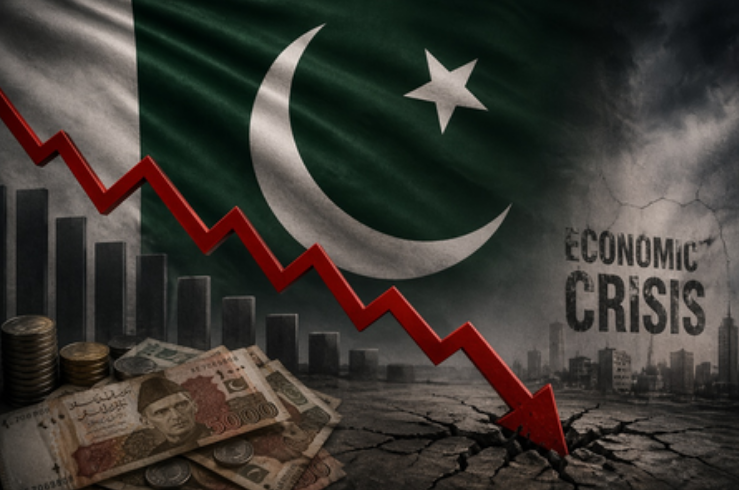

NEW DELHI — Pakistan could face an economic blow of as much as $68 billion if conflict in the Middle East escalates and the Strait of Hormuz remains closed for an extended period, according to a report presented to the National Assembly Standing Committee on Finance.
The Policy Research Institute of Market Economy, known as PRIME, outlined three possible scenarios for Pakistan’s economy in a presentation cited by Business Recorder. The analysis focused on the potential effects on the country’s external sector, including higher import costs, weaker exports and reduced remittance inflows.
Under the mildest scenario, in which hostilities ease quickly and the Strait of Hormuz reopens soon, Pakistan’s estimated economic loss would be about $10 billion, equal to roughly 2.5 percent of gross domestic product.
A more prolonged conflict lasting three months could raise the cost to between $24 billion and $32 billion, or nearly 8 percent of GDP, according to the report.
The most severe scenario assumes a prolonged closure of the strategic waterway and a sharp increase in crude oil prices to $150 per barrel. Under that outcome, Pakistan’s economic losses could rise to between $50 billion and $68 billion, equal to nearly 17 percent of GDP.
The report warned that such pressures could weaken Pakistan’s balance of payments, drain foreign exchange reserves and potentially trigger a financial crisis even with an International Monetary Fund program in place.
Pakistan’s foreign exchange reserves currently stand at around $15 billion, leaving the country with limited room to finance a widening current account deficit, according to the report. PRIME cautioned that the financing gap under a severe scenario could become unsustainable.
The report also warned of rising inflation. Consumer price pressures could reach about 10 percent even under a mild scenario, while a prolonged crisis could push inflation to between 15 percent and 18 percent, driven largely by currency depreciation and higher food and energy prices. (Source: IANS)