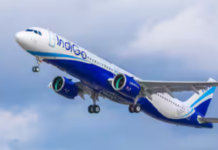
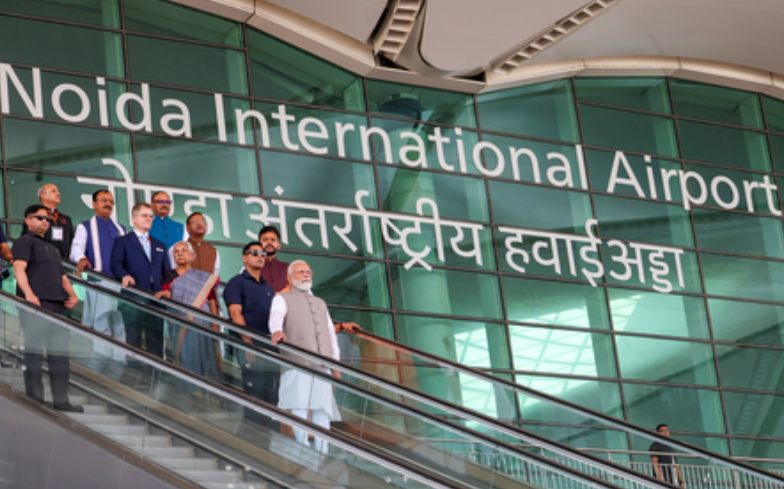

NEW DELHI — IndiGo will begin flights from Noida International Airport in Jewar, Uttar Pradesh, on June 15, 2026, becoming the first airline to start commercial operations from the newly inaugurated airport.
The low-cost carrier said it will gradually add direct service from the airport to more than 16 destinations across India. The planned network includes major cities such as Bengaluru and Hyderabad, along with tier-2 and tier-3 destinations including Amritsar, Chandigarh, Dharamshala, Jaipur, Lucknow, Navi Mumbai, Pantnagar and Srinagar.
Bookings are being opened in phases through IndiGo’s website, mobile app and authorized travel partners, the airline said.
“Strategically positioned on the Yamuna Expressway, Noida International Airport (NIA) will be the new gateway for western Uttar Pradesh, alongside the NCR,” said Aloke Singh, chief strategy officer at IndiGo.
“Large metropolitan regions of India are maturing to support multiple airports, and IndiGo is proud to contribute to this evolution by serving all three in the NCR — IGI Airport, Hindon, and now NIA. As we continue to expand our operations, we remain committed to delivering affordable, on-time, and hassle-free travel experiences across our unparalleled network,” Singh added.
Noida International Airport is one of India’s largest greenfield airport projects and is expected to become a major gateway for domestic and, eventually, international travelers. The airport has been developed with a focus on multi-modal connectivity, supported by road and rail links connecting Delhi-NCR with western Uttar Pradesh.
IndiGo’s launch at the airport is expected to improve access for travelers across the National Capital Region, expand domestic connectivity and support India’s infrastructure-led aviation growth.
The first phase of the airport was developed under a public-private partnership at an investment of about Rs 11,200 crore. It will initially be able to handle 12 million passengers annually, with capacity expected to scale to 70 million passengers a year after full development. (Source: IANS)