New Delhi — Apple’s latest parental control features are being seen as part of the company’s broader privacy-focused strategy at a time when governments and regulators around the world are putting greater pressure on technology companies to improve children’s online safety, analysts said Tuesday.
At its WWDC 26 annual conference, Apple introduced upcoming software updates designed to give parents more control over how children use Apple devices and which apps, contacts and content they can access.
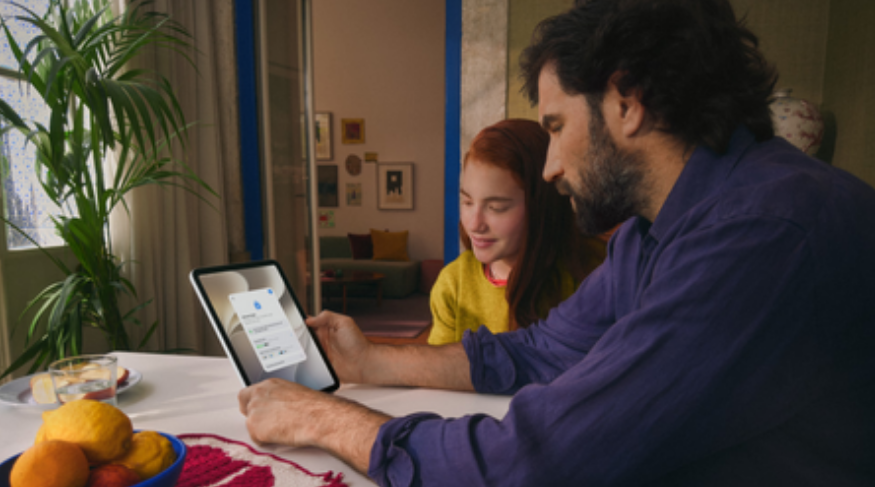
The new tools allow parents to create child accounts with age-appropriate protections enabled across the system. Through Setup Assistant, parents can decide which apps are available to a child and retain control over what can be added later.
Apple is also strengthening communication safety features. Parents will be able to require approval before a child connects with a new contact, while automatic safeguards can intervene when explicit or violent content is being shared.
Prabhu Ram, vice president of the Industry Research Group at CyberMedia Research, said digital wellbeing is becoming an important platform differentiator as families place more emphasis on safe technology environments for children.
“More broadly, digital wellbeing is emerging as a genuine platform differentiator. The platform most credibly positioned as a safe environment for children holds a meaningful structural advantage,” Ram said.
Analysts said Apple’s control over both hardware and software gives it an advantage in building a consistent parental control system across devices. By contrast, the broader Android ecosystem faces greater challenges because of its wide range of manufacturers, devices and software versions.
Ram said Apple is also reshaping its artificial intelligence strategy around privacy, utility and ecosystem integration, with a more capable and personalized Siri at the center of that approach.
“Apple is repositioning its AI value proposition around privacy, utility, and deep ecosystem integration — with a more capable, context-aware, and deeply personal Siri AI at the centre,” Ram said.
While WWDC 25 was defined by Apple’s Liquid Glass design language, analysts said WWDC 26 was centered more heavily on Siri and artificial intelligence.
Counterpoint Research Director Tarun Pathak said Apple may have entered the AI race later than some rivals, but its Siri AI implementation appears promising, supported by its Gemini partnership.
“Apple, though late to the party, has lived up to expectations with Siri AI, thanks to the Gemini partnership. The implementation looks extremely promising. Apple is viewing AI with the user at the centre of it. The usage of world knowledge, personal context, and on-screen awareness combined with app actions creates an end-to-end implementation,” Pathak said.
Pathak said a truly conversational Siri in iOS 27 could help Apple reset the AI narrative ahead of the iPhone 18 upgrade cycle.
“As AI builds a more personal context, the advent of Siri AI, could be the ultimate Apple ecosystem lock-in,” he said.
Alongside Siri AI, analysts said child privacy was one of the most significant themes from the event. Pathak said rising screen time and children’s private phone use have become major concerns for parents.
“Higher screen time and what a child has access to in their phones in private is one of the key anxiety points of a parent. Apple has worked a lot towards solving this by building multiple guardrails and giving greater control to a parent on what their child can see, access and even who they can talk to,” Pathak said. (Source: IANS)