
Bengaluru–Marvell Technology will invest $250 million in India over the next three years to expand its research and development operations, engineering workforce and infrastructure, the U.S.-based semiconductor company announced Wednesday.
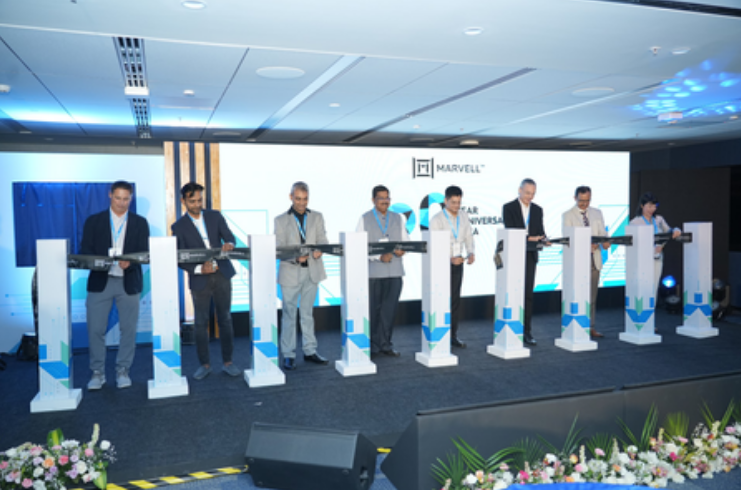
The investment, unveiled as Marvell marks 20 years of operations in India, includes plans to double its workforce in the country during the three-year period.
As part of the expansion, Marvell is opening a new wing at its Bengaluru office and increasing its presence in Hyderabad. The additional facilities will support the design and development of advanced semiconductor products for artificial intelligence, cloud computing and data infrastructure applications.
“India has become a strategic hub of engineering excellence for Marvell, playing a critical role in advancing the infrastructure technologies that power the world’s leading hyperscalers and cloud providers,” said Navin Bishnoi, Vice President and India Country Manager at Marvell.
“We are grateful to our customers, partners, government collaborators, academic institutions and especially our exceptional team, whose innovation, expertise and dedication have been instrumental to the growth and success of Marvell in India,” Bishnoi added.
Marvell established its India operations in Bengaluru in 2006. India has since become the company’s second-largest research and development organization globally.
The company operates engineering centers in Bengaluru, Pune and Hyderabad, where teams work on semiconductor technologies including 2-nanometer process nodes and beyond, high-speed analog intellectual property, subsystem design, software and firmware development, and end-to-end silicon engineering.
Marvell said its India-based teams contribute to several technology platforms, hold numerous patents and are increasingly using advanced AI tools to improve engineering productivity and accelerate product development.
The company is also investing in India’s broader semiconductor ecosystem through partnerships with universities, startups, industry associations and government organizations. (Source: IANS)