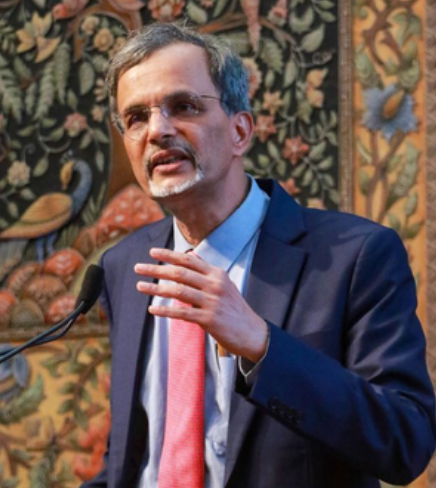

Mumbai — India must strengthen its manufacturing base, attract more foreign investment and prepare its workforce for an economy increasingly shaped by artificial intelligence if it hopes to become a developed nation by 2047, Chief Economic Adviser V. Anantha Nageswaran said Thursday.
Speaking at the 13th SBI Banking & Economics Conclave 2026, Nageswaran said India’s development push is unfolding amid rising geopolitical tensions, supply-chain disruptions, climate-related uncertainty and growing competition from China’s manufacturing sector.
He said both the public and private sectors will need to rethink existing approaches and adapt to a rapidly changing global economic environment.
According to Nageswaran, India must build greater economic resilience while maintaining high growth if it is to achieve its long-term development goals.
Manufacturing, he said, will be critical to diversifying the country’s growth engines and strengthening its economic resilience and security. India cannot choose between manufacturing and services, he added, arguing that both sectors must grow together.
Nageswaran said India’s goods trade deficit, excluding oil and gold, remains at about 3.5 percent to 4 percent of GDP, underscoring the need to expand domestic manufacturing.
At the same time, he cautioned that efforts to promote domestic production should go beyond import substitution and include a stronger focus on export competitiveness.
The CEA said India also faces intense competition from advanced economies for global capital and needs stronger policy frameworks at both the national and state levels.
Greater tax certainty, simpler regulations, stronger investor protections and access to skilled workers will be important in attracting foreign investment, he said.
Nageswaran also called for strategic reserves of critical commodities and greater domestic capacity to produce smaller but essential components that could become bottlenecks during disruptions to global supply chains.
He said resilience cannot be created through large-scale industrial capacity alone. Policymakers and businesses must also identify weak points across supply chains and prepare for potential shocks to maintain continuity and stability. (Source: IANS)