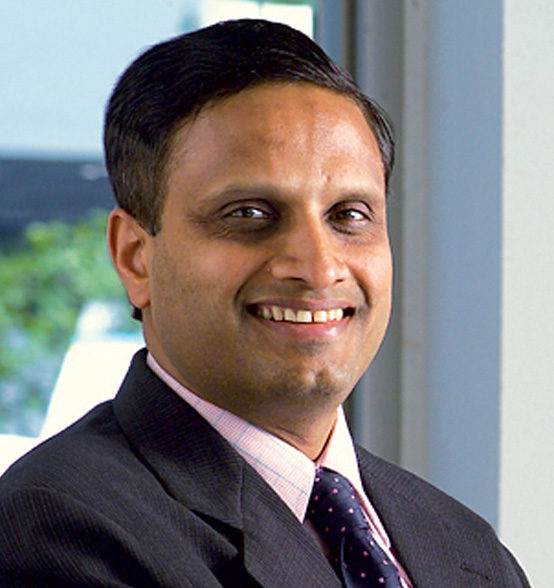

NEW DELHI–India has the potential to significantly expand its role in the global artificial intelligence industry, supported by government policies that encourage innovation without imposing excessive regulation, IBM Chairman and CEO Arvind Krishna said Monday.
Speaking during an interaction in New Delhi on November 16, Krishna said India has already demonstrated its ability to develop and implement large-scale digital technologies, including the Aadhaar biometric identification system, digital payment platforms and quick-commerce services.
However, he said the country still needs to establish a clearer position in the rapidly evolving global AI landscape.
“Somehow on AI, I think India has to find its place in terms of what it wants to do. When I look at the government, I think the government has done what the government can. It is trying to be careful not to over-regulate, because if you over-regulate, as we’ve seen in Europe, then there is, like, no ecosystem at all,” Krishna said.
Krishna acknowledged the Indian government’s efforts to support domestic AI development while avoiding regulatory measures that could discourage private-sector investment and technological advancement.
He said India is encouraging the creation of homegrown AI technologies that could eventually be used across government operations and public services.
At the same time, Krishna cautioned against excessive government intervention in determining which companies or technologies should receive financial support.
“So, I think the government is doing what it can, but I’m not a big believer that the government should cause bailouts and write industrial policy top-down. I think that’s a dangerous path to go down. Though many people want that, because if the government does that, then effectively they’re asking the government to pick winners,” he said.
Krishna also emphasized India’s importance to IBM’s worldwide operations, describing the country as a significant market, product development center and source of skilled technology professionals.
“It’s a great market. It’s a great place to build products, and it’s a great place to have employees who help IBM on a global footprint,” Krishna said.
Addressing concerns about AI regulation, Krishna praised India’s relatively flexible approach, contrasting it with regulatory policies adopted in Europe.
“Innovation can flourish using AI and the Indian government knows this. Europe is the only place where they regulate so hard that innovation becomes hard,” he said.
His remarks come as India continues to develop a national framework for AI governance intended to balance technological innovation with public safety and accountability.
The India AI Governance Guidelines outline a principles-based approach focused on responsible AI development, public trust and protecting individuals from potential technological risks.
The framework identifies several areas of concern, including misinformation, AI-generated deepfakes, algorithmic bias and unintended consequences for society.
Rather than relying exclusively on new legislation, the guidelines recommend evaluating existing laws to determine whether additional safeguards are needed.
Among the issues identified for further review are legal liability, personal data protection, intellectual property rights, verification of digital content and the potential misuse of generative AI systems.
The proposed governance structure also includes the establishment of an AI Governance Group, a Technology and Policy Expert Committee and an AI Safety Institute to provide oversight and technical expertise.
Krishna’s comments highlight the opportunities facing India as governments and technology companies worldwide compete to develop AI capabilities, attract investment and establish regulatory frameworks for the emerging industry. (Source: IANS)