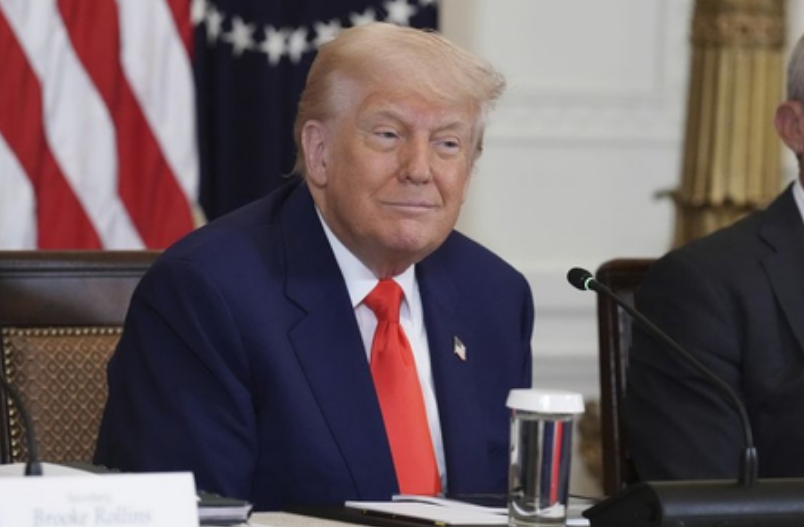
NEW YORK— Former U.S. President Donald Trump on Monday threatened to “substantially” increase tariffs on India, accusing the country of making “big profits” by reselling Russian oil on the global market.
While Trump didn’t specify the new tariff rate—on top of the 25 percent he announced on Friday—he issued the warning via a post on Truth Social, claiming India’s actions undermine efforts to pressure Russia to end the war in Ukraine.
“India is not only buying massive amounts of Russian oil, they are then, for much of the oil purchased, selling it on the open market for big profits,” Trump wrote. “They don’t care how many people in Ukraine are being killed by the Russian war machine. Because of this, I will be substantially raising the tariff paid by India to the USA.”
Earlier, Trump proposed a 100 percent “secondary tariff” on all buyers of Russian oil, but his latest threat appeared specifically targeted at India. He has also extended the deadline for Russia to agree to a ceasefire with Ukraine to later this week.
Over the weekend, Indian officials, speaking anonymously, reportedly said that New Delhi would continue purchasing Russian oil despite the pressure—prompting a new wave of criticism from Trump.
Though he singled out India, Trump did not mention whether similar penalties would apply to China, Turkey, or other countries that also continue to buy Russian oil. The omission is notable given ongoing trade negotiations between the U.S. and China, which could be complicated by any new tariffs.
According to the International Energy Agency, about 40 percent of India’s oil imports now come from Russia, with India receiving around 70 percent of Russia’s total oil exports. Before the Ukraine conflict, Russian oil accounted for just 0.2 percent of India’s imports.
Indian refiners have reportedly exported refined products such as gasoline and diesel made from Russian crude, some of which re-enter the global market.
Last Friday, amid reports that India’s Russian oil imports were declining, Trump had taken a more conciliatory tone. “I understand that India is no longer going to be buying oil from Russia. That’s what I heard. I don’t know if that’s right or not. That is a good step. We will see what happens,” he told reporters.
However, in a separate Truth Social post, he struck a harsher tone: “I don’t care what India does with Russia. They can take their dead economies down together, for all I care.”
That comment sparked a sharp exchange with former Russian President Dmitry Medvedev, which reportedly played a role in Trump ordering two U.S. nuclear submarines to strategic positions.
There are broader geopolitical and economic risks at play. Russia could retaliate by cutting off the Caspian Pipeline Consortium, which transports Kazakh oil through Russian territory to Europe. Meanwhile, forcing India—the world’s third-largest oil importer—to shift away from Russian crude could drive up global oil prices, affecting the U.S. and other nations.
In response to the controversy, Indian government sources reiterated that there has been no pause in Russian oil imports. “India’s energy purchases are driven by national interests and market forces. We have no reports of Indian oil firms halting Russian imports,” one official stated.
Ministry of External Affairs (MEA) spokesperson Randhir Jaiswal said last week, “You are aware of our broad approach to energy sourcing. We look at what’s available in the market and assess the prevailing global situation. We’re not aware of any specific changes.”
“Our relationships with other countries stand on their own merit and should not be viewed through the lens of a third country. India-Russia ties remain steady and time-tested,” Jaiswal added. (Source: IANS)