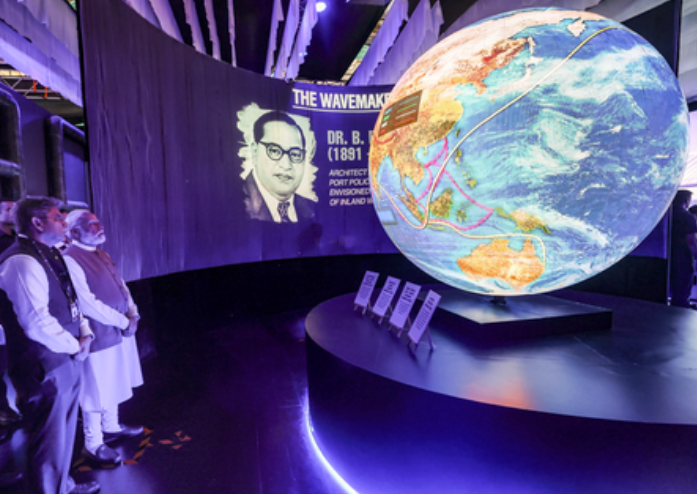
New Delhi — India is doubling down on efforts to transform its maritime sector into a greener, cleaner, and more sustainable ecosystem, leveraging its vast coastline, expanding industrial base, and strategic geographic position, according to an official statement issued on Monday.
The Ministry of Ports, Shipping and Waterways has outlined the Maritime India Vision 2030 as a blueprint to empower the sector while advancing sustainability, resilience, and long-term growth. The plan focuses on strengthening trade and connectivity alongside reducing environmental impact.
According to the ministry, the future of maritime transport lies in clean fuels such as green hydrogen, ammonia, biofuels, and liquefied natural gas. In this context, India’s National Green Hydrogen Mission is playing a central role in promoting zero-emission fuels and ensuring that ports support not only commerce but also a sustainable future.
The National Green Hydrogen Mission aims to cut carbon emissions and position India as a global leader in green hydrogen. By 2030, the mission targets annual production of 5 million tonnes of green hydrogen, attracting investments of about Rs 8 lakh crore, creating nearly 6 lakh jobs, and saving around Rs 1 lakh crore in fossil fuel imports.
The mission covers hydrogen production, pilot projects, electrolyser manufacturing, skill development, infrastructure creation, and research, with plans to replace fossil fuels in sectors such as steel, transport, and fertilizers. To accelerate progress, the ministry has identified Kandla, Paradip, and Tuticorin as ports to be developed into green hydrogen hubs.
The government said a combination of policy initiatives, legislative reforms, and green shipping programs is reshaping the maritime ecosystem, with a focus on cleaner ports, low-emission fleets, smart infrastructure, and inclusive growth. As India charts its course toward 2047, it aims to emerge not only as a major maritime power but also as a responsible steward of the seas and a globally competitive, environmentally conscious economy.
Complementing these efforts is the Maritime Amrit Kaal Vision 2047, a long-term roadmap for maritime growth, with investments of nearly Rs 80 lakh crore planned across ports, coastal shipping, inland waterways, shipbuilding, and green shipping initiatives.
The government is also promoting sustainable maritime operations through the development of green corridors, the introduction of green hydrogen bunkering at major ports, and the adoption of methanol-fueled vessels. The roadmap outlines more than 300 actionable initiatives and projects India’s rise as one of the world’s leading maritime and shipbuilding powers by the centenary of its independence.
Initiatives such as the Harit Sagar Green Port Guidelines, 2023, the National Green Hydrogen Mission, 2023, and the Green Tug Transition Programme, 2024, are transforming ports and shipping into models of sustainability. In addition, the recently announced Rs 25,000 crore Maritime Development Fund is expected to catalyze investments in green infrastructure, alternative fuels, and fleet modernization, reinforcing India’s leadership in maritime decarbonization. (Source: IANS)