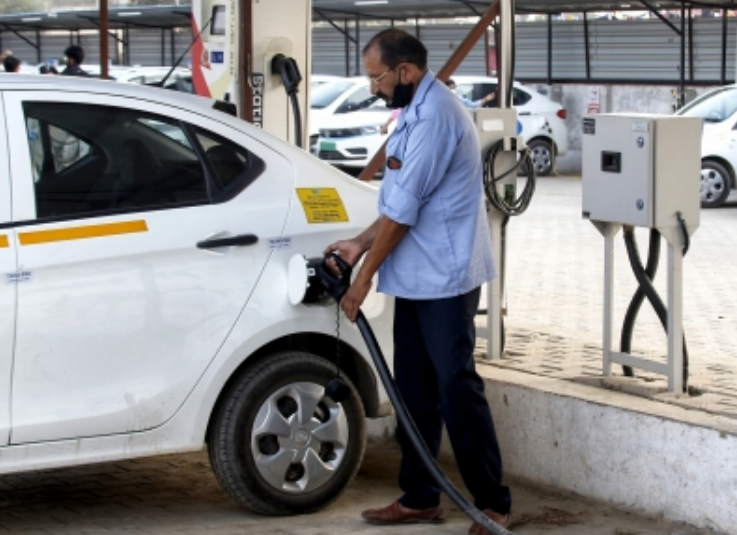
New Delhi — Electric vehicle sales in India could reach 22 million units by 2035, with EV penetration exceeding 50 percent across most vehicle segments, according to a report released on Monday.
The growth is expected to be driven by favorable demand trends, strengthening supply chains, and supportive regulatory policies, positioning India firmly on the path toward a cleaner and more sustainable mobility future.
In the report, KPMG India said the country has an opportunity to convert potential supply chain risks into strategic advantages and emerge as a global leader in sustainable mobility. As demand for critical raw materials such as lithium, nickel, cobalt, and rare earth elements rises sharply, the firm stressed the need for strategies that enhance resilience and competitiveness within India’s EV ecosystem.
The report noted that electric vehicles require nearly six times more minerals than conventional vehicles, leading to exponential growth in demand for critical materials amid accelerating global EV adoption. It also highlighted that more than 70 percent of global refining capacity for these minerals is concentrated in a limited number of regions, increasing exposure to geopolitical and trade-related risks.
Exploration of mineral reserves in states such as Jammu and Kashmir, along with investments in domestic processing and recycling, could help reduce India’s reliance on imports, the report said.
KPMG emphasized that policy measures such as incentivizing domestic refining, securing long-term supply contracts, and investing in research and development for alternative materials will be critical to sustaining the EV transition.
“India’s EV ambitions hinge not just on manufacturing capacity but on securing the raw material backbone. Without resilient supply chains, the transition risks being delayed or derailed,” said Rohan Rao, Partner, Automotive and Lead–Electric Mobility at KPMG in India.
The report underlined that India’s success in the EV sector will ultimately depend on how effectively it addresses raw material challenges. By combining domestic initiatives with global partnerships, the country can strengthen its supply chains, reduce vulnerabilities, and position itself as a leader in sustainable mobility.
Raghavan Viswanathan, Partner, Deal Advisory at KPMG in India, said strategic investments in exploration, refining, and recycling will be pivotal. “India must act now to build partnerships and capabilities that ensure long-term competitiveness in the global EV ecosystem,” he added. (Source: IANS)