
NEW YORK — A powerful “bomb cyclone” battered the U.S. Northeast, dumping more than 90 centimeters of snow in some areas and unleashing winds topping 135 kilometers per hour, knocking out power to nearly half a million customers and forcing the cancellation of roughly 11,000 flights.
The storm tore through a roughly 600-kilometer stretch of coastal states from Pennsylvania to Massachusetts from Sunday night into Monday, prompting governors and local officials to declare states of emergency and restrict road travel to essential vehicles only. Emergency crews struggled to keep up as snow piled up rapidly and high winds intensified the damage.
Meteorologists classified the system as a bomb cyclone because it underwent bombogenesis — a rapid strengthening marked by a drop of at least 24 millibars in central pressure within 24 hours — dramatically increasing the storm’s intensity.
Warwick, Rhode Island, recorded the heaviest snowfall at 91 centimeters, while winds reached about 134 kilometers per hour in Nantucket, Massachusetts. Authorities reported two storm-related deaths, both in Rhode Island.
By Monday evening, snowfall had tapered off across New York and much of the region, though the National Weather Service warned that heavy snow and strong winds would persist into Tuesday morning across Maine as the storm moved offshore.
Massachusetts Governor Maura Healey described the conditions as unprecedented, saying, “This is as bad as I’ve seen it.” Local media in the state labeled the blizzard “historic.”
More than 300,000 homes and businesses were without power in Massachusetts, with another 100,000 outages reported in New Jersey. Downed trees and snapped power lines accounted for most of the disruptions. Officials also reported hundreds of vehicles stranded on snow-choked roads, some with occupants trapped inside.
In New York City, the storm marked the worst blizzard in a decade. Central Park recorded 45 centimeters of snow, the city’s ninth-highest snowfall on record. Governor Kathy Hochul declared a state of emergency and imposed restrictions on non-essential travel in coastal parts of the state.
The city was still recovering from a severe cold wave and snowstorm last month that left at least 18 people dead, most of them homeless. During this storm, city officials said outreach teams were directed to move vulnerable individuals off the streets. At a news conference Monday, Mayor Zohran Mamdani said there were no reported deaths.
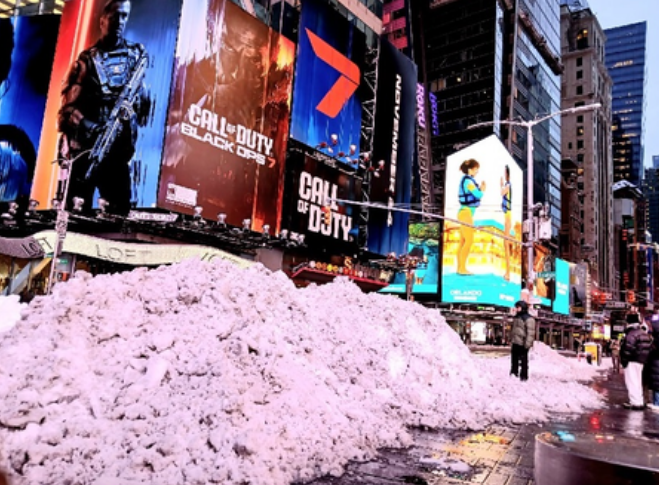
City streets were largely empty throughout Monday, with buses resuming limited service by evening. As snow was cleared and piled into mounds by sanitation crews, tourists returned to areas such as Times Square.
Financial markets remained open, with many traders and investors working remotely, but most offices — including the United Nations — and schools were closed due to travel restrictions. In parts of the region, including Rhode Island, schools and offices are expected to remain closed Tuesday.
The federal government said disaster response resources would be available if needed. The administration of President Donald Trump assured states that immediate relief assistance could be provided despite broader budget disputes affecting the Department of Homeland Security. (Source: IANS)