
WASHINGTON — The United States has cast its response to China’s rise as “the defining story of the 21st century,” outlining a strategy that positions India as a critical — though conditional — economic partner within a broader Indo-Pacific framework.
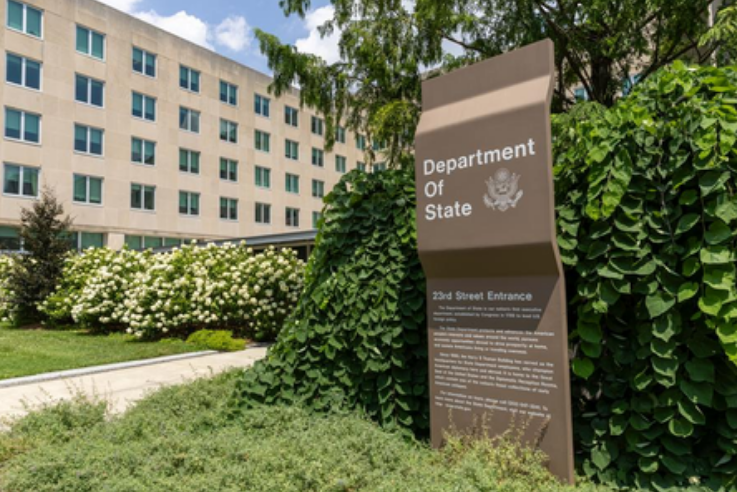
In its Agency Strategic Plan for Fiscal Years 2026–2030, the State Department says how Washington responds to Beijing’s growing influence will shape the century ahead, citing not only the global nature of economic competition but also U.S. national interests in the Indo-Pacific.
The document underscores the region’s strategic weight, noting that Asia already accounts for nearly half of global gross domestic product by some estimates, while key sea lanes and supply chains run through the area. It adds that regional peace and stability benefit the United States regardless of competition with China.
Within that context, India is singled out as an important partner. The strategy states that the United States will seek closer ties with growing regional economies such as India, but “on terms that advance U.S. security and economic interests and avoid repeating past mistakes.”
Economically, the plan outlines a dual-track approach aimed at building an Indo-Pacific system that is free from external coercion while remaining open to the American public. It pledges support for U.S. reindustrialization through commercial advocacy, the development of secure and resilient supply chains, and the promotion of American and trusted alternatives to what it describes as Chinese-created dependencies.
The strategy also signals a tougher stance on trade enforcement, saying the United States will identify and counter efforts to evade U.S. tariffs through third-country transshipment.
On security, the plan calls for maintaining a favorable military balance in the Indo-Pacific to keep trade routes open and deter aggression. It says China has undertaken an “unprecedented military buildup” that the United States must highlight publicly and be prepared to counter.
At the same time, the document stresses that Washington does not seek war or regime change in China and will continue to pursue open lines of communication to reduce misunderstandings and risks.
Alliances feature prominently in the strategy. The United States says it will deepen economic and military ties with Indo-Pacific allies and partners in ways that strengthen U.S. power rather than impose costs. It also points to groupings such as the Quadrilateral Security Dialogue as tools to advance shared priorities and counter attempts by China to establish what it calls a hostile and exclusionary economic system.
Linking economic policy directly to national security, the plan says Washington will move to protect domestic industries from unfair trade practices and illegitimate competition, with the stated goal of reestablishing the United States as a leading economic and technological force in the 21st century.
The Indo-Pacific has emerged as the central arena of strategic competition between Washington and Beijing over the past decade, with trade, technology, supply chains, and military posture at the core of rising tensions. (Source: IANS)