SEOUL — Samsung Electronics introduced its seventh-generation high bandwidth memory chip, HBM4E, at Nvidia’s annual GTC conference, underscoring deepening collaboration between the two companies as demand for advanced AI infrastructure accelerates.
The unveiling took place during Nvidia GTC 2026, a four-day event in California, where Samsung showcased its capabilities as a comprehensive memory solutions provider for Nvidia’s next-generation Vera Rubin AI platform.
The HBM4E chip, revealed publicly for the first time, is expected to deliver speeds of up to 16 gigabits per second per pin and bandwidth of 4.0 terabytes per second—an improvement over the previous HBM4 generation, which offers 13 gigabits per second per pin and 3.3 terabytes per second of bandwidth.
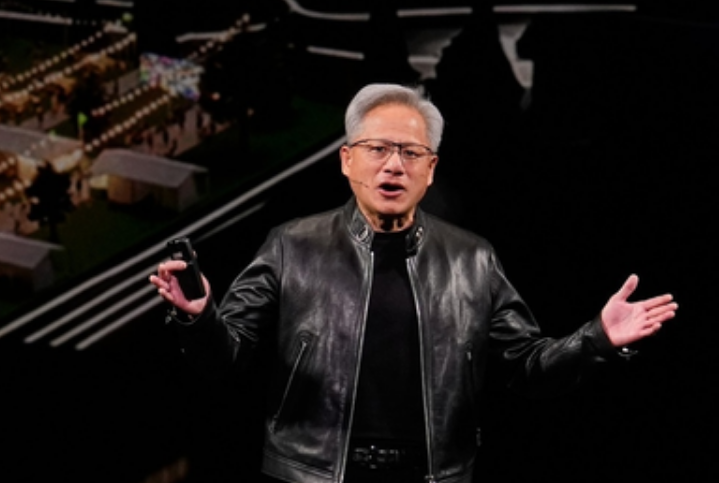
During his keynote address, Nvidia CEO Jensen Huang highlighted the growing partnership with Samsung, thanking the company for its role in manufacturing Nvidia’s Groq 3 language processing unit.
“I want to thank Samsung, who manufactures the Groq 3 LPU chip for us, and they are cranking as hard as they can. I really appreciate you guys,” Huang said, confirming that Samsung’s foundry division is producing the chip.
The remarks point to an expansion of cooperation beyond memory chips into semiconductor contract manufacturing, as Nvidia increasingly relies on partners to scale its AI hardware ecosystem.
Samsung recently began commercial shipments of its sixth-generation HBM4 memory, designed for Nvidia’s Vera Rubin platform, which the companies describe as a high-performance foundation for AI computing.
The company also introduced hybrid copper bonding technology, which enables stacking of more than 16 layers while reducing thermal resistance by about 20 percent compared with existing thermal compression bonding methods. The advancement highlights Samsung’s focus on improving packaging efficiency for next-generation memory solutions.
Samsung said it plans to continue supplying high-performance memory products to support Nvidia’s AI platform, as both companies seek to drive the next phase of global AI infrastructure development.
At the conference, Samsung also showcased its broader AI portfolio through an exhibition featuring three themes—AI factories, local AI, and physical AI—highlighting its next-generation chips designed to meet growing industry demand. (Source: IANS)