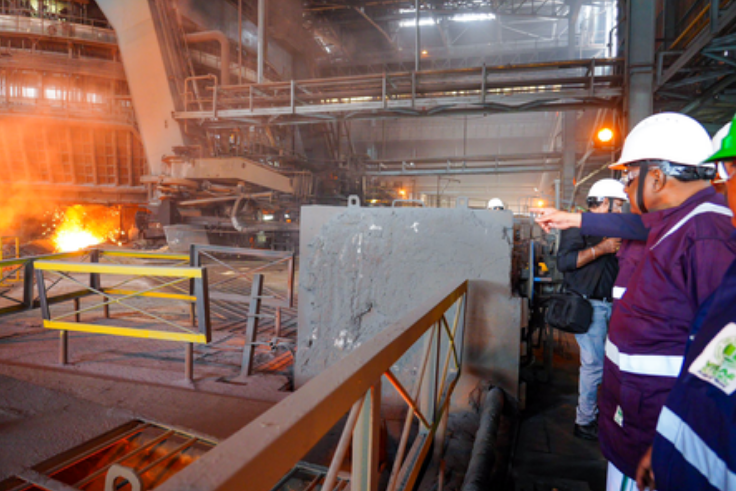
NEW DELHI — India’s steel industry expanded sharply in 2025–26, with production rising 10.7 percent year over year to about 168.4 million tonnes, reinforcing the country’s position as the world’s second-largest steel producer, according to a government statement released Wednesday.
The growth was driven primarily by strong domestic demand, with finished steel consumption reaching 164 million tonnes, up roughly 7 to 8 percent. Increased activity across infrastructure, construction, railways, and manufacturing sectors fueled the rise, supported by continued government investment in large-scale projects and urban development.
India also posted a strong turnaround in external trade. Finished steel exports climbed 35.9 percent to more than 6 million tonnes during the April–March period, while imports dropped 31.7 percent. The shift helped India regain its status as a net exporter of steel, expanding its presence in markets across the Middle East, Europe, and Southeast Asia.
Officials attributed the export growth to improved competitiveness and efforts to diversify overseas markets.
The industry continued to attract investment aimed at boosting capacity and upgrading technology. India’s total steelmaking capacity reached 220 million tonnes in 2025–26 and is projected to grow to 300 million tonnes by 2030, backed by both public- and private-sector spending.
Major producers, including SAIL, Tata Steel, and JSW Steel, have been expanding capacity and focusing on higher-value steel products, signaling confidence in long-term demand.
Despite the growth, profitability remained under pressure. Steel prices had been trending lower over the past three years before showing signs of recovery in early 2026. However, fluctuating raw material costs — particularly coking coal — along with volatile global prices and rising logistics expenses weighed on margins. Geopolitical tensions further pushed up freight costs toward the end of the fiscal year.
Energy supply disruptions also posed challenges. Reduced gas availability from the Middle East amid the Iran conflict led to shortages of industrial fuels such as LPG, threatening production continuity for some manufacturers. The government responded by increasing LPG allocations to key sectors, including steel, to help stabilize output.
Looking ahead, the industry is expected to maintain steady growth, supported by strong domestic demand and ongoing infrastructure expansion. However, challenges tied to energy security, input costs, and global market volatility are likely to persist.
At the same time, increased steel production has boosted logistics activity. Indian Railways reported higher freight volumes of iron ore and finished steel, while growth across India’s eight core industries pointed to sustained industrial momentum nationwide. (Source: IANS)