

New Delhi — Maruti Suzuki India Limited has begun commercial production at its fourth manufacturing plant in Hansalpur, Gujarat, increasing the site’s annual capacity to 1 million vehicles.
The addition raises production capacity at the complex from 750,000 vehicles a year and makes Hansalpur India’s largest passenger vehicle manufacturing facility at a single location.
It is also the first Suzuki manufacturing complex globally to reach annual capacity of 1 million vehicles at one site.
With the commissioning of Plant D, Maruti Suzuki’s total manufacturing capacity in India has increased to 2.9 million vehicles annually.
The automaker has invested a cumulative Rs 25,288.7 crore in the Hansalpur complex, including an estimated Rs 3,900 crore in the newly opened plant.
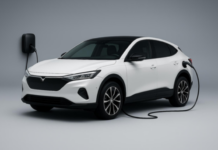
The new facility will initially produce the e VITARA, Maruti Suzuki’s flagship battery-electric vehicle and its first model for the electric passenger vehicle market.
The Hansalpur complex also manufactures the FRONX, Baleno and Swift.
The Gujarat facility has become a major export hub for Maruti Suzuki, accounting for nearly 47% of the company’s overseas shipments during fiscal 2026.
Maruti Suzuki has also expanded the use of rail transportation at the site. The company commissioned an in-plant railway siding at Hansalpur in March 2024 under the Indian government’s GatiShakti program.
Since rail dispatches began in March 2023, more than 750,000 vehicles have been transported through the network, reducing fuel consumption, road congestion and transportation-related emissions.
In February 2026, the Gujarat railway siding became the first modal-shift transportation project of its kind to be registered under Verra’s Verified Carbon Standard program.
Maruti Suzuki has also expanded workforce training initiatives in Gujarat through two Japan-India Institutes for Manufacturing in Mehsana and Gandhinagar. The institutes, established in partnership with the governments of India and Japan, have trained more than 1,200 students. (Source: IANS)