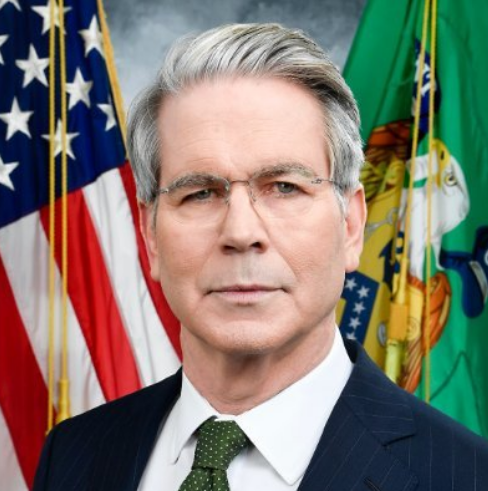

Asheville — U.S. Treasury Secretary Scott Bessent called on Group of 20 nations to remove regulatory, tax and investment barriers that are restraining economic growth, while Federal Reserve Chairman Kevin Warsh said stronger growth is ultimately a policy choice.
Opening a G20 finance meeting in Asheville, North Carolina, Bessent said the global economy has operated below its potential for too long and urged governments to address policy-related obstacles within their control.
“Policy failures of our own making must no longer be one of them,” Bessent told G20 finance ministers and central bank governors.
He pointed to excessive regulatory and administrative burdens, poorly designed financial incentives and tax systems, insufficient public and private investment, fragmented domestic markets and gaps in workforce skills and mobility as major constraints on growth.
Bessent said the Trump administration is working to address those challenges through regulatory changes, investment incentives and policies aimed at expanding domestic energy production.
“We have launched a great regulatory reset to accelerate growth, stimulate investment, increase employment, and boost wages,” he said.
Bessent said President Donald Trump had set a goal of eliminating 10 existing regulations for every new regulation introduced, adding that federal agencies exceeded that target last year.
The Treasury Secretary also cited rising business investment and said the United States had strengthened its position as a destination for global capital and as a major energy producer.
“These achievements are shaping the next era of growth, and we are just getting started,” Bessent said.
He identified tax, energy and regulatory certainty as important drivers of economic expansion and welcomed efforts by other G20 members to pursue reforms designed to boost growth and give the private sector a greater role in policymaking.
Federal Reserve Chairman Kevin Warsh, meanwhile, told the meeting that economic growth should be viewed as a result of policy choices.
“I’ve said previously that inflation is a choice,” Warsh said. “What I’ll add to the discussion today, consistent with my remarks a couple of days ago in Jackson Hole, is growth is a choice too.”
Warsh said economic outcomes are shaped not only by governments and central banks but also by decisions made by businesses, banks, technology companies and other private-sector institutions.
He added that U.S. economic growth appeared to have strengthened and said central bankers should look beyond consumer spending and short-term demand when assessing the economy.
Warsh said policymakers must also evaluate supply-side developments, particularly productivity and the economy’s underlying growth potential.
Citing Congressional Budget Office projections, he said U.S. economic growth is expected to average about 1.8% annually over the next decade, including relatively modest productivity gains.
“Interestingly, those numbers are down from the actual economic growth over the last 10 years,” Warsh said.
He said policymakers should examine whether increased capital spending can raise productivity and whether those gains can be sustained over the long term, arguing that the answers will be important for future economic policy.
The G20 brings together the world’s major advanced and emerging economies to coordinate on international economic issues. Its finance track includes finance ministers and central bank governors who discuss economic growth, financial stability, taxation, debt and other global challenges. (Source: IANS)