

New Delhi — India is stepping up efforts to develop geothermal energy as part of its broader renewable energy strategy, with the commissioning of the country’s first two geothermal wells in Ladakh marking a major milestone.
According to a government factsheet, geothermal energy could play an important role in India’s goal of reaching net-zero emissions by 2070 because it can provide low-carbon electricity around the clock, unlike intermittent renewable sources such as solar and wind.
The government notified its National Policy on Geothermal Energy in September 2025, establishing a framework for the exploration and development of geothermal resources. The Ministry of New and Renewable Energy is responsible for implementing the policy.
In July 2026, the ONGC Energy Centre commissioned India’s first two geothermal wells in Puga Valley, Ladakh, one of the country’s most promising geothermal regions.
Located more than 14,000 feet above sea level, Puga Valley is known for its hot springs and underground heat reserves. The two wells, each about 1,000 meters deep, will be used to evaluate the geothermal reservoir.
The project is also expected to support development of India’s first 1-megawatt demonstration geothermal power plant.
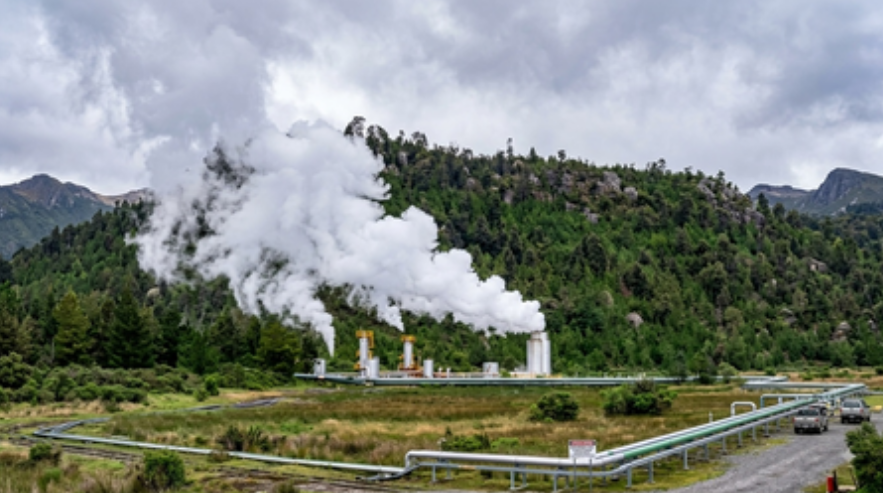
Geothermal power uses heat from beneath the Earth’s surface to generate electricity. Hot water and steam are brought to the surface through deep wells, with steam used to drive turbines connected to generators. The water can then be condensed and reinjected underground to help sustain the resource.
Beyond electricity generation, geothermal energy can also be used for district heating, agriculture, aquaculture and heating and cooling applications.
India has significant geothermal potential because of its varied geology. The Geological Survey of India has mapped 381 hot springs and identified 10 geothermal provinces across the country.
The government estimates India’s theoretical geothermal potential at about 10.6 gigawatts, with 42 sites identified as promising for electricity generation or direct heat applications.
The 10 geothermal provinces include the Himalayan region, Naga-Lusai, Andaman and Nicobar Islands, Son-Narmada-Tapi, the West Coast, Cambay Graben, Aravalli, Mahanadi, Godavari and the South Indian Cratonic region.
The government said pilot projects and international partnerships are also expanding potential uses of geothermal energy in areas such as power generation, heating, agriculture and geo-tourism. (Source: IANS)