
Washington — Leading U.S. technology companies have agreed to adopt internal risk reviews, independent audits and board-level oversight for rapidly advancing superintelligence systems, establishing a common set of safeguards as they compete to develop more powerful artificial intelligence.
The commitments emerged from a White House meeting with President Donald Trump and executives from companies at the forefront of AI development.
Meta CEO Mark Zuckerberg described the agreement as a “White House accord” intended to give the public greater confidence that advanced AI systems will operate as intended.
“The basic idea is that we wanna give the American people and our customers confidence that the technology works in the way that we intend,” Zuckerberg said.
He said the companies had agreed to principles that include strong internal controls, mechanisms for identifying problems and several layers of auditing and oversight.
Those measures would begin with internal risk assessments and extend to independent outside auditors and evaluators. Company boards would also review reports produced through the auditing process.
“The idea isn’t that this is the only thing that we will ever do. It is that this is a start and an accord that the whole industry could come to,” Zuckerberg said.
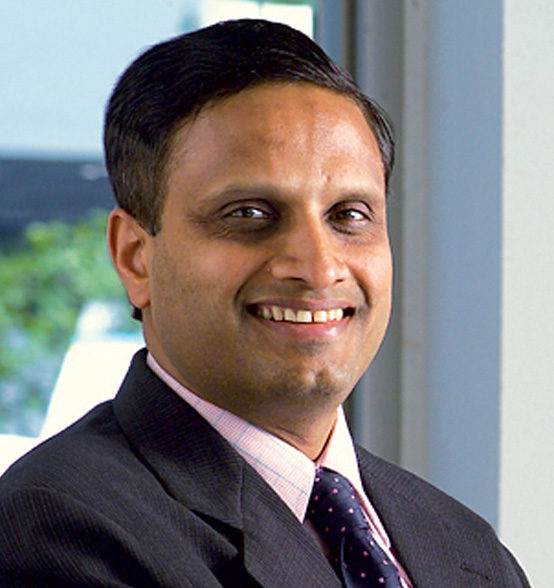
Google CEO Sundar Pichai called the development “historic and consequential,” saying the industry recognizes both the potential benefits and risks associated with increasingly capable AI.
“We have to make sure we are addressing the risks, and the president has asked us as an industry to step up,” Pichai said.
Anthropic CEO Dario Amodei also acknowledged the potential dangers.
“AI has incredible benefits,” Amodei said. “But I think the technology has very real risks.”
He added that the mechanisms for addressing those risks remain under discussion but said companies need to work together to advance the technology safely.
Nvidia CEO Jensen Huang said technological progress and safety should not be viewed as competing goals.
“There’s no conflict between innovation, technology and safety,” Huang said. “We’re gonna advance this technology that is so consequential to humanity and so consequential to the future prosperity of our nation, and we’re gonna do it responsibly and safely.”
Trump emphasized industry self-regulation during the meeting, saying the companies would help hold one another accountable.
“This is going to be all for the good and we’re gonna have it be nice and safe,” Trump said. “And they’re really gonna be policing each other.”
The president also framed the development of advanced AI as part of the broader U.S. technology competition with China, warning that excessive restrictions could push investment and data center construction overseas.
Trump said he was close to selecting a federal official to oversee superintelligence policy and expected to announce the choice within several days after consulting with industry executives and congressional leaders.
Huang described the scale of AI infrastructure investment as “the largest industrial revolution in history,” pointing to new chip plants, computer facilities and AI data centers being built in the United States.
“We have chip plants coming up, computer plants coming up, AI factories coming up,” Huang said, adding that the expansion was “creating a million jobs here in the United States.”
The rapid development of advanced AI has also intensified questions about its potential impact on employment.
Tesla and SpaceX CEO Elon Musk said technology has historically eliminated some jobs while creating others and predicted AI could ultimately produce much greater economic abundance.
“I think by far the most likely outcome is an age of abundance, where we don’t have just a universal basic income. We have universal high income,” Musk said.
He also predicted major advances in healthcare through the combination of robotics and superintelligence, saying the technology could eventually make high-quality medical care broadly available.